
Selecting the right warehouse space is one of the most critical business decisions for agribusinesses operating in the UAE. Whether you’re storing perishable produce, agricultural machinery, or bulk inputs like fertilisers and seeds, your choice of warehouse directly impacts operational efficiency, cost management, and supply chain reliability. With demand for industrial and logistics space booming in the Emirates, making an informed choice is key to staying competitive and scalable.
Understanding the UAE Warehousing Market
The UAE has rapidly positioned itself as a global logistics and trade hub, attracting significant demand for warehouses for rent as companies expand their operations across the region. In 2024, demand for industrial and logistics space in Dubai alone surged by an extraordinary 225%, reaching 40.6 million square feet, driven by sustained business activity and foreign trade growth.
E-commerce growth and international trade are core catalysts for this trend. Warehouse transactions in H1 2025 rose by 60% year-on-year in Dubai, prompting rental increases of up to 20% in key areas like Jebel Ali and Dubai Industrial City.
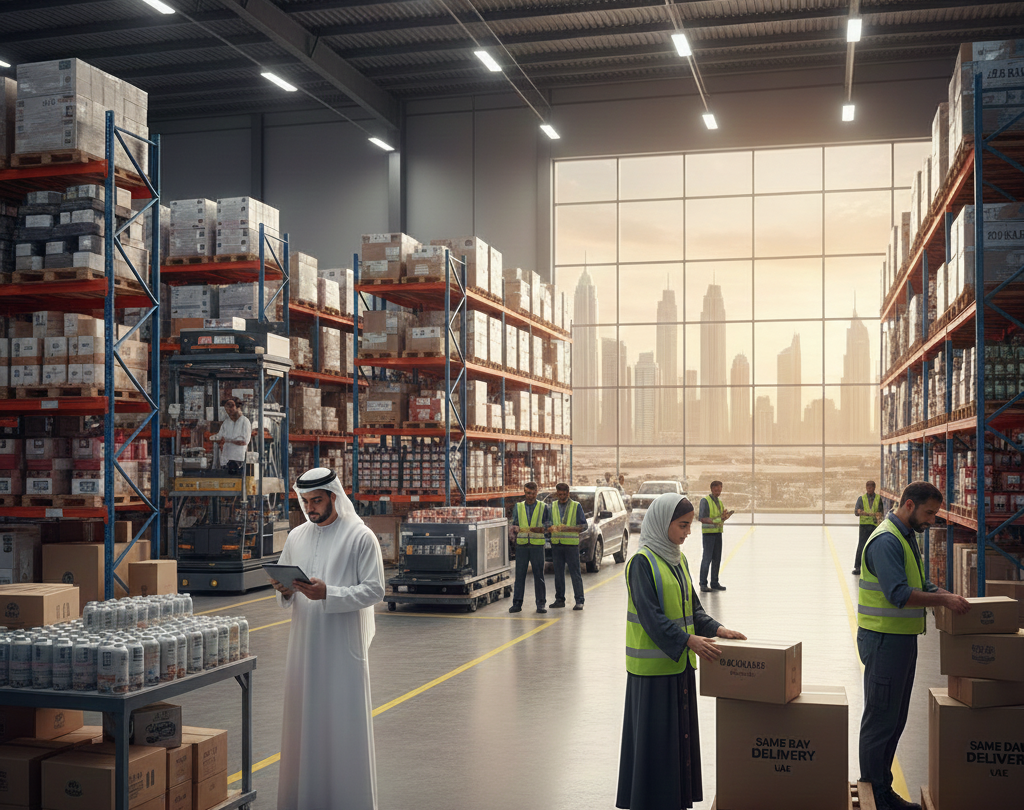
This vibrant landscape presents both opportunities and challenges for agribusinesses seeking the right warehouse space. Let’s break down the essential factors to consider.
- Define your warehousing needs
Understanding these dimensions will help you avoid overpaying for underutilised space or being undersized for your actual operations. Before you start viewing warehouse for rent options, it’s critical to assess your business requirements:
- Storage Type: Do you need cold storage for perishables like fruits and vegetables, or ambient storage for dry goods?
- Space Requirements: Estimate the square footage your operations will realistically require.
- Turnover & Handling: Will you be moving goods frequently, or storing long-term inventory?
- Choose the right location
Given the UAE market’s tight supply conditions and the strategic importance of location when leasing warehouse space, starting your search early is essential. For agribusinesses, proximity to key nodes like ports, airports, and major highways such as the Emirates Road or Sheikh Mohammed Bin Zayed Road can reduce transport costs and minimise lead times.
In the UAE:
- Jebel Ali, Dubai Industrial City, and National Industries Park are prominent logistics hubs ideal for distribution-focused businesses.
- Abu Dhabi’s KEZAD zones offer expanding industrial and cold storage facilities with strong connectivity.
- Understand leasing options: Industrial vs Commercial warehouse for rent
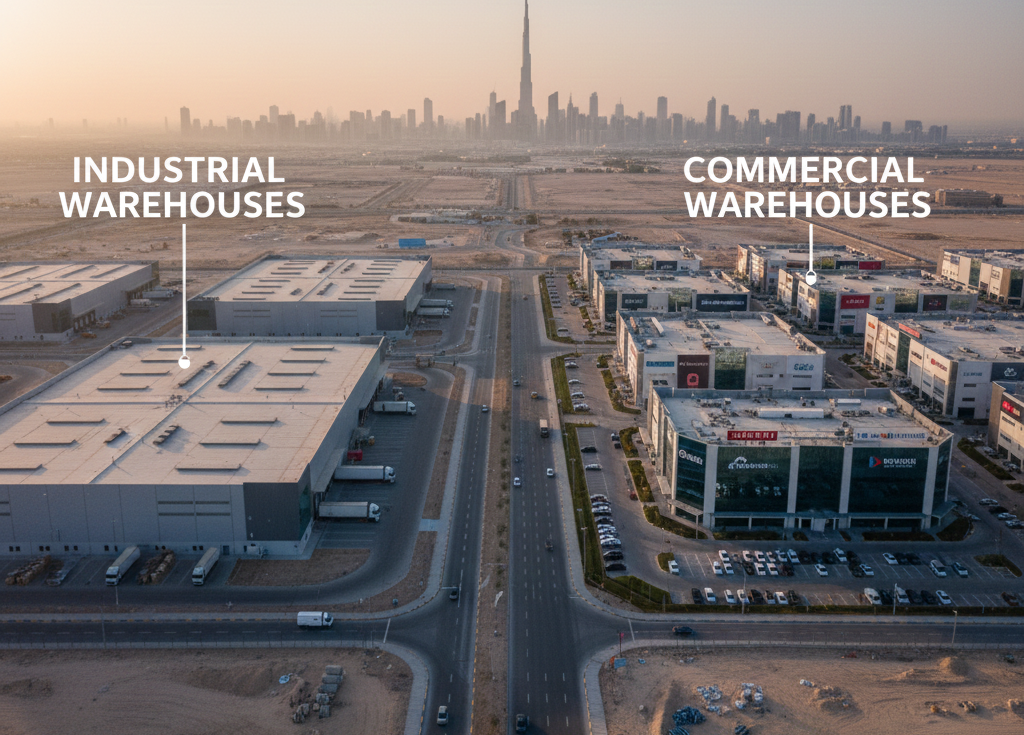
When you search for industrial space for rent or commercial warehouse for rent, you’ll encounter different classes of facilities:
- Industrial Warehouse Space — Typically designed for logistics, manufacturing support, and heavy-duty operations. These spaces often offer larger clear heights, heavy load-bearing floors, and freight access.
- Commercial Warehouse Space — Suited for lighter storage, distribution centres, and value-added services such as packaging or e-fulfillment.
Choose based on your operation’s scale and the intensity of handling required. Agribusinesses dealing with bulk goods and machinery may find industrial warehouse space more fitting, whereas those focusing on packaged goods distribution may profit from commercial warehouse options.
- Factor in scalability and expansion
Agribusinesses are dynamic. Seasonal yields, export drives, or unexpected demand spikes can require scalable warehouse space solutions.
Given the current UAE market, where vacancy rates for Grade A warehouses are reportedly as low as 3%, early engagement with landlords could secure more favourable lease terms. Consider facilities that offer:
- Flexible lease terms
- Option to expand or consolidate space
- Shorter commitment periods during growth phases
- Evaluate infrastructure & facilities
The right warehouse for rent should offer robust support infrastructure to protect your goods and streamline operations:
✔ Fire suppression and safety systems
✔ Climate control for sensitive agriproducts
✔ Adequate racking and material handling equipment
✔ Efficient internal logistics access
Access to utilities, a reliable power supply, and loading/unloading areas are must-haves, especially for agribusinesses handling perishables or time-sensitive commodities.
- Lease terms and cost analysis
Pricing for warehouse space in the UAE has been steadily rising. With limited land availability and rising industrial demand, rents are projected to continue growing in 2025. Factor in logistic efficiencies: a slightly higher rent closer to major transport hubs might save on distribution costs.
Before signing any lease:
- Compare rent per square foot for similar spaces
- Assess service charges and utility fees
- Evaluate long-term cost implications
- Compliance and regulatory requirements
Agribusinesses must ensure their warehouse operations comply with UAE regulations, including:
- Municipality licensing
- Food safety standards (if applicable)
- Fire and occupational safety codes
- Customs requirements for bonded or export storage
stocyard Simplifies Warehouse Selection for Agribusinesses
Navigating the UAE’s competitive warehousing market can be complex, especially with rising demand for quality warehouse space across key industrial zones. This is where stocyard plays a strategic role. stocyard is a specialised digital platform that helps agribusinesses discover verified warehouse for rent, industrial space for rent, and commercial warehouse for rent across prime logistics hubs in the UAE.
By offering transparent listings, location intelligence, and demand-aligned warehousing options, stocyard enables businesses to shortlist spaces that match their operational, storage, and scalability needs. For agribusinesses seeking efficiency, compliance-ready infrastructure, and faster decision-making, stocyard reduces the friction traditionally associated with warehouse sourcing and leasing.
Conclusion
Choosing the right warehouse space for your agribusiness in the UAE involves more than just price and square footage. With industrial and logistics demand at record levels and vacancy rates tight, planning your strategy around location, scalability, infrastructure, and regulatory compliance ensures smoother operations and future-ready growth.
Whether you are exploring warehouse for rent, industrial space for rent, or considering a commercial warehouse for rent, aligning these strategic factors will help secure an optimal warehousing solution that supports efficiency, cost-effectiveness, and business resilience in the dynamic UAE marketplace.
FAQs
1. What factors should I consider when choosing warehouse space for my agribusiness in the UAE?
When selecting warehouse space, consider location, storage type (cold vs. ambient), space requirements, infrastructure, scalability, lease terms, and compliance with UAE regulations.
2. What is the difference between an industrial and a commercial warehouse for rent?
Industrial warehouses are designed for heavy-duty operations, machinery, and bulk storage, while commercial warehouses are suited to lighter storage, packaging, and distribution-focused operations.
3. How can I ensure my warehouse meets agribusiness needs like cold storage or perishable goods handling?
Look for warehouses with climate control, advanced racking, fire safety systems, and reliable utilities. Verify compliance with food safety regulations if storing perishable items.
4. Can platforms like Stocyard help me find suitable warehouse space in the UAE?
Yes. Stocyard offers verified listings of warehouse for rent, industrial space for rent, and commercial warehouse for rent, helping agribusinesses identify spaces that meet operational and scalability requirements efficiently.
5. How does the location of the warehouse impact my agribusiness operations?
Proximity to ports, airports, and major highways reduces transportation costs, improves delivery speed, and ensures smoother supply chain management.