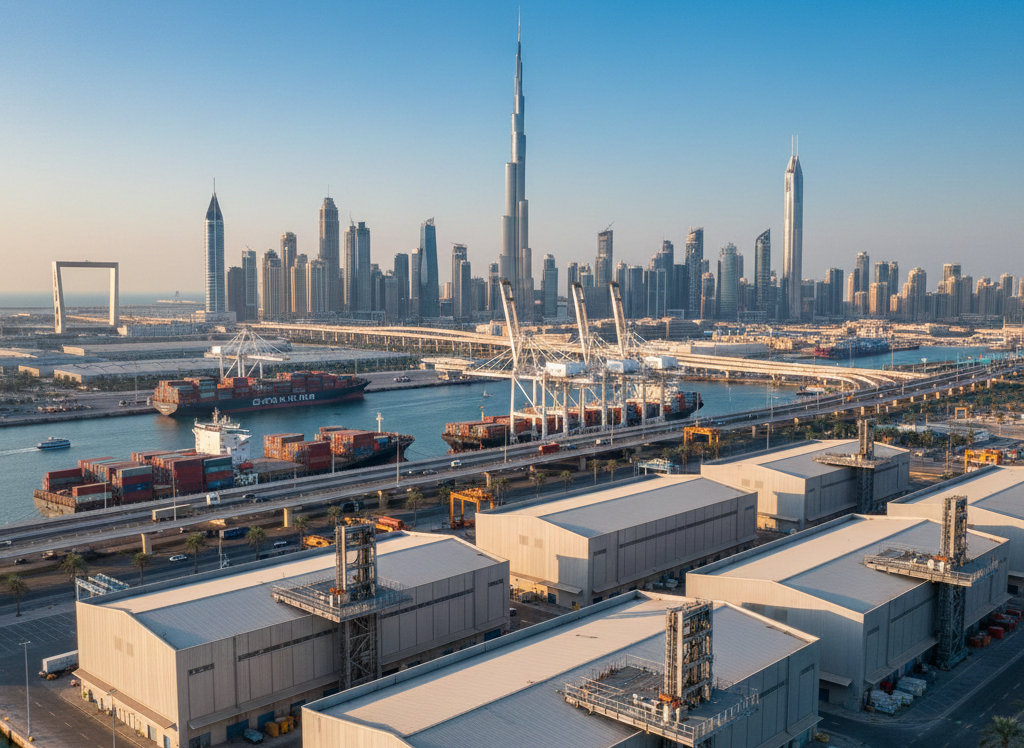
Did you know that Dubai’s warehouse transactions surged by 60% year-on-year in H1 2025, with rents rising up to 20% in key submarkets such as Jebel Ali, reflecting intensifying demand for modern logistics space?
Dubai’s strategic geographic location, world-class infrastructure, and pro-business policies have established it as a leading logistics and warehousing hub across the Middle East, Africa, and South Asia. With the rapid expansion of e-commerce, 3PL (third-party logistics), manufacturing, and cold chain sectors, the types of warehouses have diversified significantly.
The UAE’s warehousing market generated approximately USD 21.8 billion in revenue in 2024 and is forecasted to grow at a CAGR of 7.8% from 2025 to 2030, with cold storage facilities being the fastest-growing segment. Let’s find out how businesses can benefit from different types of warehouses, from traditional storage to high-tech logistics solutions!
- General warehouses: General warehouses are the most common form of storage facility and cater to a broad range of products, from consumer goods to industrial equipment, including retail inventory, pallets, bulk storage, and non-temperature-sensitive goods. These spaces are typically used for long-term or short-term storage of non-perishable goods, offering flexibility in layout and racking systems. They can be stand-alone buildings or part of larger industrial parks, such as Dubai Industrial City or Dubai Investments Park (DIP).
- Cold storage warehouses: Cold storage facilities are critical for food, pharmaceuticals, chemicals, and other temperature-sensitive products. Dubai’s growing consumer base and rising imports of perishable goods have driven greater demand for chilled and frozen warehousing. As highlighted in market projections, cold storage warehousing is the fastest-growing segment within the UAE warehousing market. These warehouses maintain precise climate control and often feature blast-freezing, humidity regulation, and dedicated loading docks.
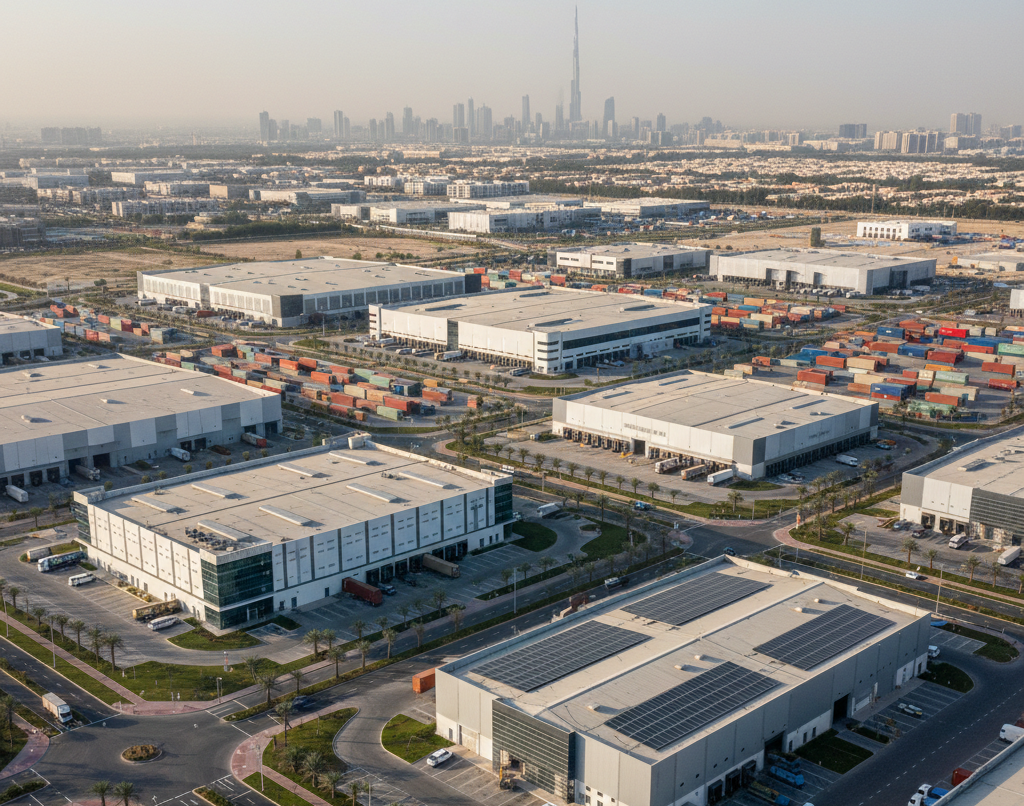
- Bonded warehouses: Businesses can store imported goods without paying customs duties until the goods are released into the local market. This makes them particularly attractive for international traders and import-export businesses operating out of Dubai’s free zones, such as Jebel Ali Free Zone (JAFZA) or Dubai Airport Free Zone (DAFZ). This flexibility helps businesses defer duty payments and manage cash flow more effectively, especially for re-exports.
- Fulfilment centres: With the explosive growth of e-commerce across the UAE and the wider MEASA region, fulfilment centres have become indispensable. Unlike traditional warehouses, fulfilment centres integrate storage with order processing, packing, and last-mile delivery, providing fast, efficient distribution to end customers. These facilities are typically located close to urban centres and logistics corridors to expedite deliveries and reduce transportation costs.
- Smart warehouses: Smart warehouses represent the cutting edge of logistics infrastructure by integrating automation, IoT devices, AI algorithms, robotics, and advanced WMS (Warehouse Management Systems) to streamline operations and enhance accuracy. Smart facilities improve operational efficiency, reduce human error, and support real-time inventory monitoring, an increasingly vital capability given Dubai’s focus on technology-driven logistics.
- Light industrial / manufacturing warehouses: These facilities are hybrid, combining storage and light production or assembly operations. Businesses involved in light manufacturing, packaging, or custom finishing often prefer these units as they combine logistical capacity with flexible operational space.
Key factors shaping Dubai’s warehouse market (2025–26)
- Demand surge: The demand for industrial and logistics space in Dubai increased significantly in recent years, with requirements reaching 40.6 million sq ft in 2024, a 225% increase from the prior period.
- Rising rents & occupancy: Prime warehouse rents have climbed sharply, with average rents increasing around 15% year-on-year and occupancy rates nearing full capacity in many grade-A facilities
- Supply pipeline: Nearly 7.2 million sq ft of new industrial and logistics space is planned for delivery in the coming years, including high-spec facilities in emerging logistics corridors such as Warsan and National Industries Park.
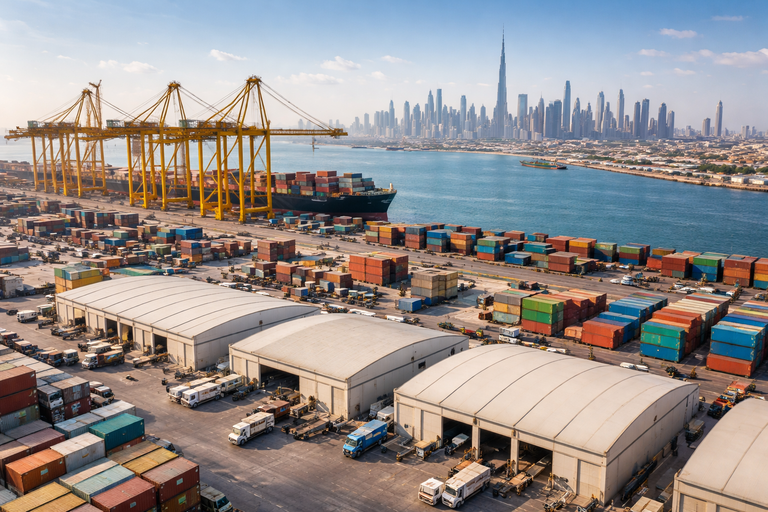
How stocyard provides flexible warehousing across the UAE
At stocyard, we understand that every business has unique storage and logistics requirements. That’s why our UAE-wide warehousing solutions span all major types of facilities, from traditional general warehouses to specialised cold storage, bonded facilities, fulfilment hubs, and advanced smart logistics centres.
Our network includes strategically located warehouses in key logistics zones across the UAE, offering excellent connectivity to ports, airports, and highways. Whether you are a small e-commerce brand, a multinational manufacturer, or a global trading company, stocyard provides tailored solutions with flexible lease terms, transparent pricing, and scalable space options. We also leverage modern WMS technologies to ensure seamless inventory tracking and warehouse management, empowering businesses to enhance efficiency, reduce costs, and accelerate growth within the dynamic UAE market.
Conclusion
Dubai’s diverse warehousing ecosystem reflects its position as a global trade and logistics powerhouse. Businesses today have access to highly specialised infrastructure that supports efficient storage, faster distribution, and scalable growth. With strong market demand, rising investments in logistics infrastructure, and increasing adoption of technology, the warehousing sector in Dubai is set to remain robust through 2026 and beyond.
Choosing the right type of warehouse is not just an operational decision but also a strategic one that can significantly impact cost efficiency, supply chain resilience, and customer satisfaction. Visit stocyard.com to find the right warehousing partner and location, so you can fully leverage Dubai’s connectivity strengths to stay competitive in regional and global markets.
FAQs
- What are the main types of warehouses available in Dubai?
Dubai offers a variety of warehouses, including general storage, cold storage, bonded warehouses, fulfilment centres, smart warehouses, and light industrial/ manufacturing warehouses, each catering to different business needs.
- How does a bonded warehouse work in Dubai?
Bonded warehouses allow businesses to store imported goods without paying customs duties until the goods are released into the local market, making them ideal for import-export and re-export operations.
- Which type of warehouse is best for e-commerce businesses?
Fulfillment centers are ideal for e-commerce, as they combine storage with order processing, packing, and last-mile delivery services, ensuring faster and more efficient customer fulfilment.
- What is a smart warehouse, and why is it important?
Smart warehouses use automation, IoT, AI, and advanced warehouse management systems to optimise storage, improve accuracy, and increase operational efficiency, especially for high-volume logistics operations.
- How can stocyard help businesses with warehousing in Dubai and across the UAE?
stocyard provides flexible, strategically located warehouses of all types across the UAE, including general, cold storage, bonded, fulfilment, and smart warehouses, along with modern inventory management solutions tailored to business needs.