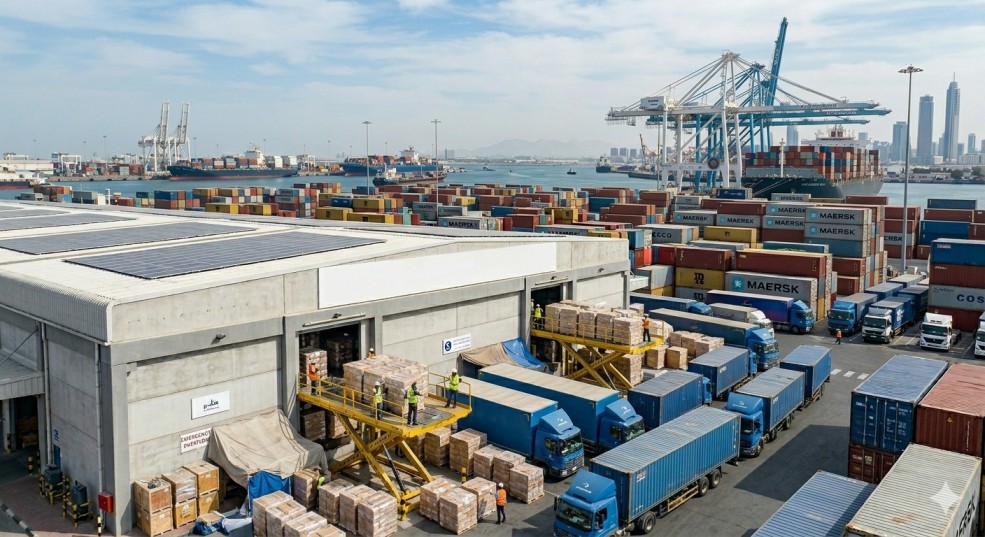
What’s more expensive, running out of stock or having too much of it?
For most businesses in the UAE, the answer is both.
Managing inventory has become one of the biggest operational challenges in a fast-growing, fast-moving market that demands even more precision. In a region built on trade, logistics, and global connectivity, dealing with inventory challenges efficiently is a strategic advantage.
A Market That Moves Fast And Demands Even Faster Decisions
The UAE has firmly positioned itself as a global trade and logistics hub. The UAE logistics market size is expected to increase by USD 14.37 billion, at a CAGR of 8.2% from 2025 to 2030, driven by steady growth in infrastructure, trade, and e-commerce.
At the same time, the UAE warehousing market alone was valued at USD 21.8 billion in 2024 and is expected to reach USD 34.2 billion by 2030.
So what’s driving this growth?
- Rising e-commerce demand
- Increasing imports and re-exports
- Expansion of SMEs and global sellers
- Strategic location between Asia, Europe, and Africa
But with growth comes complexity.
The Inventory Dilemma: Too Much or Too Little?
Every business deals with this tension:
- Overstocking ties up working capital and increases storage costs
- Stockouts lead to lost sales, unhappy customers, and broken supply chains
In a dynamic market like the UAE, where demand can shift quickly, this balance becomes even harder to maintain. And the real issue isn’t just storage space. It’s visibility. Without real-time insights into inventory levels, movement, and demand patterns, businesses are forced to rely on estimates. And in today’s environment, guesswork is expensive.
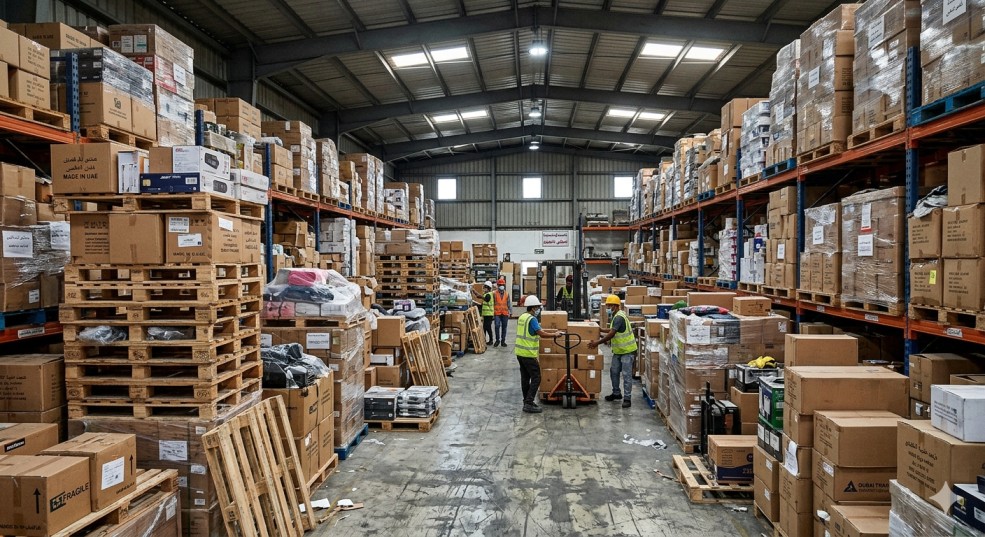
Why Traditional Storage Models Fall Short
For years, warehousing has been treated as a fixed asset, with space leased, goods stored, and inventory managed manually.
But does that still work in 2025? Not quite.
With warehouse occupancy rates reaching over 90% in prime logistics hubs like Dubai, businesses are already competing for limited, high-quality storage space. At the same time, demand is shifting toward:
- Mid-sized, flexible warehouse units
- Faster turnaround and scalability
- Integrated inventory visibility
The Shift: Smarter Inventory Management
So, what are businesses doing differently? They’re moving towards flexible, tech-enabled inventory strategies. This includes:
- Using multiple storage locations instead of a single warehouse
- Leveraging data to track stock in real time
- Aligning storage capacity with demand cycles
- Reducing dependency on long-term leases
Managing inventory challenges is no longer just about “where to store”. It’s about how intelligently you manage what you store.
Where Platforms Like stocyard Come In
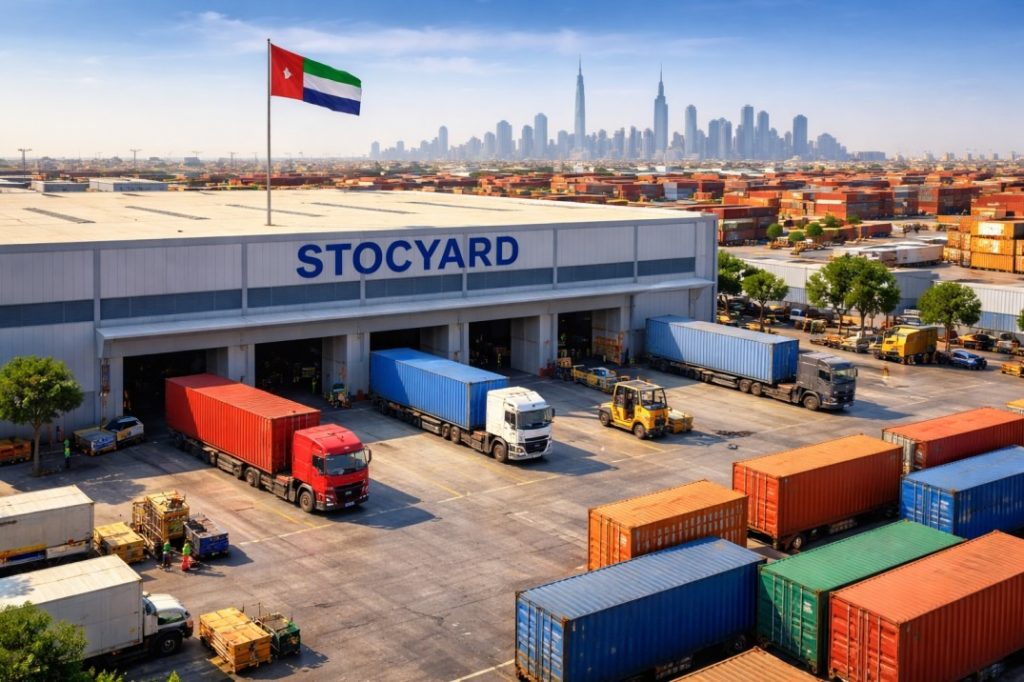
This is where the approach to storage itself is evolving. Instead of treating warehousing as a fixed constraint, platforms like stocyard are helping businesses treat it as a flexible resource.
Operating across 100+ warehouses across all 7 Emirates and supporting 50+ active clients, stocyard simplifies how businesses discover and access storage that meets their exact needs. But what makes this shift important isn’t just access to space. It is access to the right space at the right time.
For example:
- A growing e-commerce brand can scale storage during peak seasons
- An importer can find space closer to ports for faster distribution
- A distributor can optimise costs by choosing locations strategically
The idea is simple but powerful: Storage should adapt to your business, not the other way around
From Storage to Strategy
Here’s where things get interesting. When businesses rethink how to deal with inventory challenges, the impact goes beyond operations. Better inventory control leads to:
- Improved cash flow (less capital locked in stock)
- Faster order fulfilment
- Reduced wastage and losses
- Better customer satisfaction
In other words, dealing with inventory challenges directly influences growth and profitability.
Conclusion
So, what’s the real challenge? It’s not just finding storage space. It’s finding the right storage strategy.
As the UAE continues to grow as a global trade hub, businesses will need solutions that are flexible, efficient, and data-driven. And as stocyard makes storage more accessible and adaptable, inventory management is slowly shifting from a constraint… to a competitive edge.
FAQs
- What is on-demand warehousing and how does it work?
On-demand warehousing allows businesses to access storage space as needed, without long-term commitments. It offers flexibility to scale storage capacity based on demand, helping optimise costs and operations.
- Why is inventory management challenging in the UAE?
Rapid market growth, fluctuating demand, and limited availability of high-quality warehouse space make inventory management complex. Businesses often struggle to balance stock levels while controlling costs.
- How does stocyard help businesses find the right warehouse?
stocyard connects businesses with a network of 100+ warehouses across all 7 emirates, enabling them to discover and access storage spaces based on their specific requirements, location preferences, and scale.
- Who can benefit from using stocyard?
stocyard is useful for e-commerce companies, import-export businesses, distributors, and SMEs that need flexible and scalable storage solutions without heavy upfront investments. - How does flexible warehousing improve business efficiency?
Flexible warehousing allows businesses to optimise inventory levels, reduce storage costs, improve order fulfilment speed, and adapt quickly to market demand, making operations more agile and cost-effective.