
Not long ago, warehouses were viewed simply as places to store inventory until it was ready for dispatch. Today, that perception is changing rapidly. Across the UAE, warehouses are becoming intelligent operational hubs where every pallet, shipment, and movement generates valuable data that helps businesses make faster, smarter decisions.
This transformation is being fuelled by the UAE’s growing role as a global trade and logistics hub. According to the World Bank’s Logistics Performance Index (LPI) 2023, the UAE ranks 7th globally for logistics performance, reflecting the country’s world-class trade infrastructure, customs efficiency, and transport connectivity. At the same time, UAE’s e-commerce market is projected to exceed USD 17 billion by 2025, driving greater demand for faster fulfilment, real-time inventory visibility, and data-driven warehouse operations.
As supply chains become increasingly complex, businesses are no longer asking, “Where is my inventory?” They’re asking, “What is my inventory telling me?”
The shift from Storage to Intelligence
Modern warehousing is no longer defined by the amount of storage space available. Instead, its value lies in the information generated throughout the movement of goods.
Every inbound shipment, inventory scan, order dispatch, storage cycle, and vehicle movement creates operational data. When captured and analysed effectively, this information helps businesses improve inventory accuracy, optimise warehouse utilisation, forecast demand, reduce delays, and enhance customer service.
In this sense, warehouses are evolving from physical assets into data-rich business environments.
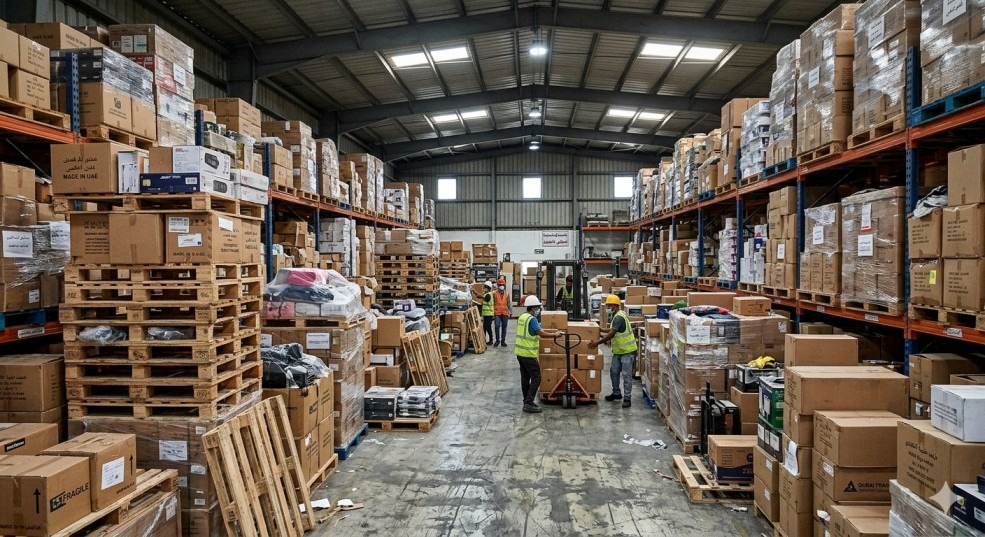
Why has data become the new competitive advantage
In today’s supply chains, speed alone is no longer enough. Businesses need visibility. Real-time warehouse data enables organisations to:
- Monitor inventory levels instantly.
- Reduce stock-outs and overstocking.
- Improve order accuracy.
- Track inventory ageing.
- Forecast replenishment requirements.
- Optimise warehouse capacity.
- Improve customer delivery timelines.
Rather than reacting to supply chain issues, businesses can anticipate and prevent them before they affect operations.
Technologies driving smart warehousing in the UAE
Several technologies are accelerating this transformation.
- Warehouse Management Systems (WMS): Modern WMS platforms provide businesses with complete visibility into inventory movements, order processing, storage locations, and warehouse performance through a single digital interface.
- Internet of Things (IoT): Connected sensors monitor environmental conditions such as temperature and humidity while tracking asset movements across warehouses.
- Artificial Intelligence: AI analyses historical operational data to forecast inventory demand, recommend storage optimisation strategies, and improve workforce planning.
- Barcode and RFID Technologies: Automated identification systems significantly improve inventory accuracy while reducing manual errors during receiving, storage, picking, and dispatch.
- Business Intelligence Dashboards: Interactive dashboards convert operational data into meaningful insights that help managers make informed business decisions based on real-time performance metrics.
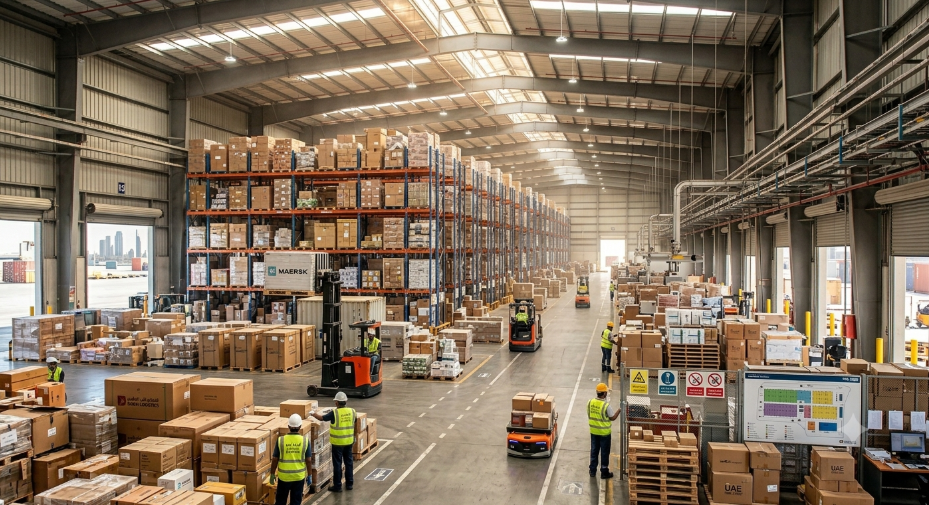
Why this matters for businesses operating in the UAE
The UAE serves as a strategic gateway connecting Asia, Europe, and Africa. Businesses operating in sectors such as retail, FMCG, food commodities, manufacturing, pharmaceuticals, and e-commerce depend on efficient warehousing to meet customer expectations and manage international supply chains. Data-driven warehouses help these businesses:
- Respond faster to market demand.
- Reduce operational costs.
- Improve inventory planning.
- Enhance order fulfilment accuracy.
- Increase supply chain resilience.
- Support regional and cross-border trade.
As supply chains continue to digitalise, access to accurate warehouse data will become just as valuable as warehouse space itself.
Beyond warehousing: The rise of integrated logistics
Warehousing is increasingly being integrated with transportation, inventory management, customs support, fulfilment, and last-mile distribution. Instead of managing these services separately, businesses are partnering with third-party logistics (3PL) providers that offer end-to-end visibility across the supply chain.
This integrated approach allows companies to track inventory, shipments, and fulfilment through connected digital platforms, enabling faster decisions and greater operational efficiency. The result is a more agile supply chain where data flows seamlessly alongside goods.
How is stocyard enabling smarter warehousing
As businesses demand greater visibility and operational efficiency, stocyard is building warehousing solutions that combine physical infrastructure with digital intelligence.
Operating across the UAE, stocyard offers integrated warehousing and third-party logistics (3PL) services designed to support inventory management, order fulfilment, distribution, and cross-border supply chains. Its facilities are strategically positioned to help businesses optimise storage while improving access to regional and international markets.
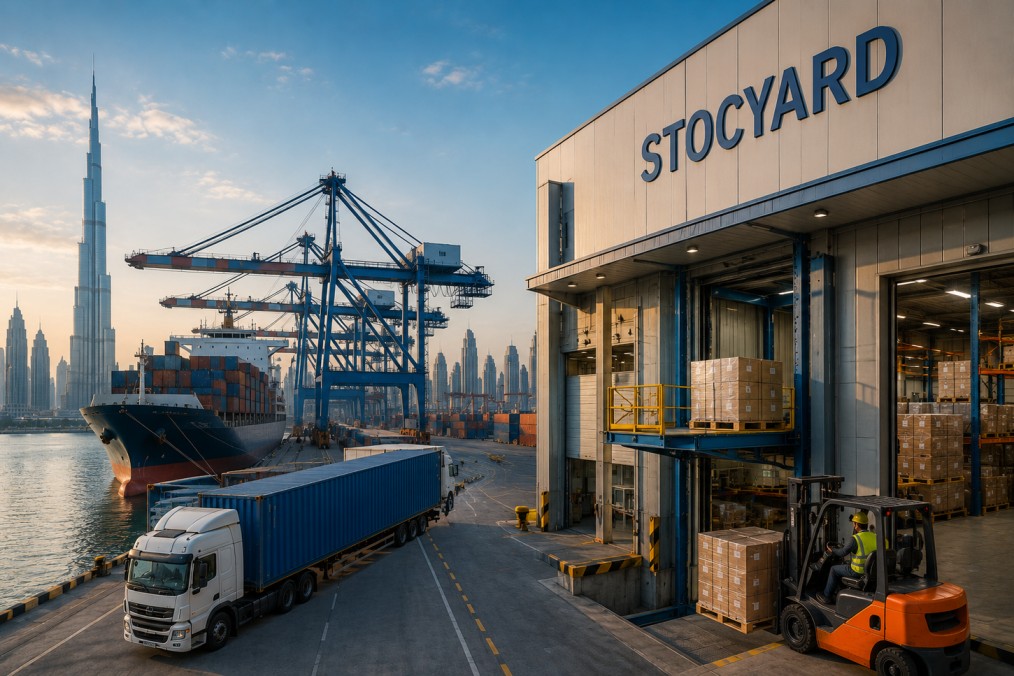
Beyond storage, stocyard focuses on delivering actionable visibility across warehouse operations. Through technology-enabled inventory management, businesses can monitor stock movement, improve inventory accuracy, and make faster operational decisions based on real-time information. This data-driven approach helps streamline fulfilment, reduce operational bottlenecks, and improve overall supply chain performance.
As warehousing continues to evolve, stocyard is helping businesses transform their warehouses into connected logistics hubs that support smarter, faster, and more informed decision-making.
Conclusion
Warehousing is no longer just about storing products until they’re needed. It has become an essential source of operational intelligence that helps businesses improve efficiency, reduce costs, and strengthen supply chain resilience.
In a market like the UAE, where global trade, digital commerce, and logistics continue to expand, data has become one of the most valuable assets inside a warehouse. Businesses that embrace smart warehousing will be better positioned to respond to changing customer expectations, optimise operations, and compete in an increasingly connected global marketplace.
FAQs
- What is smart warehousing?
Smart warehousing uses technologies such as Warehouse Management Systems (WMS), IoT devices, AI, RFID, and real-time analytics to improve inventory visibility, automate warehouse operations, and enhance decision-making.
- Why is warehousing becoming data-driven in the UAE?
The UAE’s growing role as a global logistics and trade hub has increased the need for real-time inventory visibility, faster order fulfilment, and efficient supply chain management. Data-driven warehouses help businesses achieve these goals by providing actionable operational insights.
- What are the benefits of data-driven warehousing?
Data-driven warehousing improves inventory accuracy, reduces operational costs, enhances order fulfilment, optimises storage utilisation, enables demand forecasting, and provides greater visibility across the supply chain.
- What technologies are used in modern warehouses?
Modern warehouses commonly use Warehouse Management Systems (WMS), IoT sensors, AI-powered analytics, barcode and RFID technologies, cloud-based inventory platforms, and business intelligence dashboards to improve operational efficiency.
- How does stocyard support smart warehousing in the UAE?
stocyard provides integrated warehousing and 3PL solutions that combine secure storage, inventory management, order fulfilment, distribution, and technology-enabled visibility, helping businesses build more efficient and data-driven supply chains.