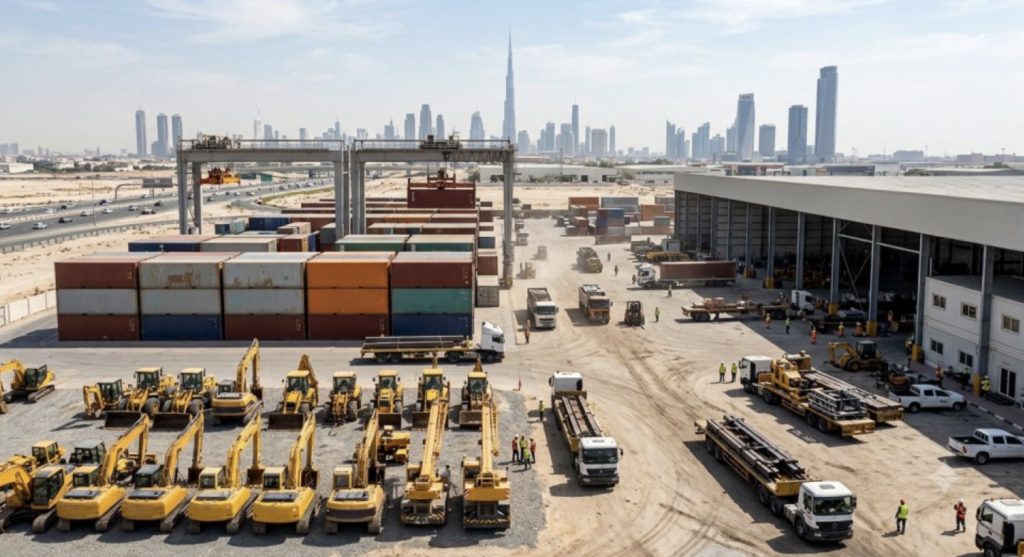
The UAE’s warehousing market is tight. If you’ve started scouting space in Dubai or Abu Dhabi this year, you’ve probably already noticed rents climbing and good units getting snapped up fast. Before you sign a lease, here’s the market context, the pricing breakdown, and the practical checklist you actually need.
The Market: Demand is Outpacing Supply
Industrial and logistics rents across the UAE have been on a sustained upward run. Average warehouses for rent in UAE rose 19.9% year-on-year to AED 46 per sq ft as of Q2 2025, while Abu Dhabi saw an even sharper 22.4% increase, reaching AED 470 per square metre. Dubai Industrial City posted the steepest annual growth of all at 32%, with rents climbing to AED 58 per sq ft on the back of constrained Grade-A supply and rising manufacturing demand.
On the global stage, Dubai’s occupancy costs have climbed to around $26.43 per sq ft, one of the sharpest rises among major warehousing markets worldwide, though still well below London’s roughly $49.
Relief is on the way, but not immediately. Knight Frank expects around 6.6 million sq ft of new industrial and logistics space to land in Dubai during 2026, the largest annual addition in recent years, with rents potentially stabilising toward the end of the year as that supply comes online.
What you’ll actually pay, by zone
Pricing varies significantly depending on where you lease:
- Jebel Ali Free Zone (JAFZA): AED 35–60 per sq ft, prized for port adjacency and 100% foreign ownership.
- Al Quoz: AED 45–85+ per sq ft — Dubai’s most expensive and most central industrial hub.
- Dubai Investments Park (DIP): AED 35–55 per sq ft for Grade-A stock.
- Abu Dhabi (KEZAD, Al Falah, Mussafah): AED 500–625 per square metre depending on the cluster, with the Abu Dhabi Airports Free Zone commanding the highest average rents in the emirate.
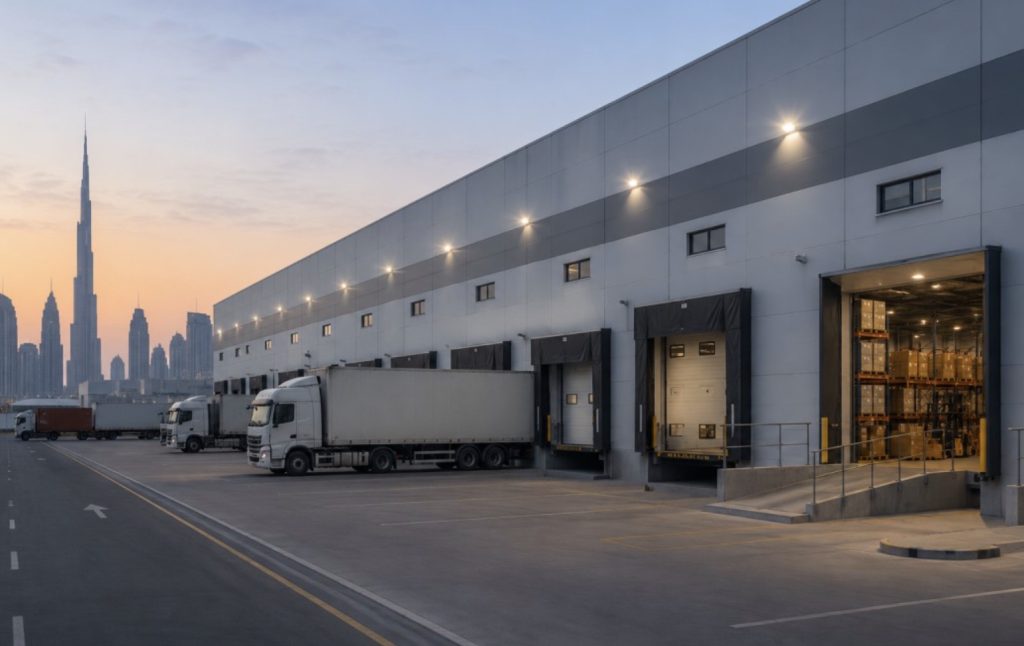
Demand in the second half of 2025 was led by logistics and manufacturing occupiers, each accounting for 21% of total leasing requirements, with mid-sized warehouses in the 10,000–50,000 sq ft range the most sought-after size band.
Costs beyond the headline rent
The quoted rate per square foot is never the full story. Budget for:
- Ejari registration: mandatory for all industrial leases, typically around AED 220 plus admin charges.
- NOC approvals: required for mezzanine installations or office partitions inside the unit.
- Leasehold restrictions: many UAE warehouses sit on leasehold land, and subletting without DLD or free zone authority approval is a serious violation, not a technicality.
Free Zone vs Mainland
Free zone leases (JAFZA, Dubai South) offer full foreign ownership, duty exemptions on re-export, and streamlined customs, ideal if your business is trade or logistics-heavy. Mainland warehouses for rent in UAE give you unrestricted access to the local UAE market without free zone trading limitations. Your choice should be driven by where your customers actually are, not just which rent looks cheaper on paper.
What’s driving long-term demand
This isn’t a short-term spike. The UAE’s Operation 300 Bn strategy aims to lift the industrial sector’s GDP contribution to AED 300 Bn by 2031, up from AED 133 Bn when it launched in 2021, and the country attracted 613 greenfield FDI projects worth $5.4 billion in just the first half of 2025. Institutional capital has taken notice too. Blackstone and Abu Dhabi’s Lunate recently launched a $5 billion platform, Glide, specifically targeting Gulf warehouse and logistics assets.
Leasing smarter with stocyard
In a market moving this fast, the real differentiator isn’t just finding four walls and a loading bay. It is operational visibility once you’re in. stocyard offers Grade-A warehousing and logistics space across the UAE with real-time inventory tracking, digital access to stock movement, and flexible leasing terms that adapt as your storage needs scale up or down. For businesses juggling multiple SKUs or seasonal stock swings, that live visibility often matters more than the per-square-foot rate alone.
Before you commit to a lease, get clear on your zone, your total occupancy cost beyond rent, and whether free zone or mainland status actually fits how you do business. Get those three right, and the warehouse itself becomes the easy part.
FAQs
- Why are warehouses of rent in UAE rising so sharply?
Demand from logistics and manufacturing occupiers is outpacing new supply, pushing rents up across Dubai and Abu Dhabi, especially in prime zones like Al Quoz and Dubai Industrial City.
- What’s the difference between leasing in a free zone versus mainland?
Free zones like JAFZA offer full foreign ownership and duty exemptions, ideal for trade-heavy businesses, while mainland leases give unrestricted access to the local UAE market.
- Are there hidden costs beyond the quoted rent?
Yes. Ejari registration, NOC approvals for mezzanine or office fit-outs, and leasehold subletting restrictions can all add to your total occupancy cost.
- When will rents start to stabilise in Dubai?
Knight Frank expects around 6.6 million sq ft of new supply in 2026, which could bring some relief toward the end of the year, though not immediately.
- What size warehouse is in highest demand right now?
Mid-sized units between 10,000–50,000 sq ft are the most sought-after, driven largely by logistics and manufacturing tenants.