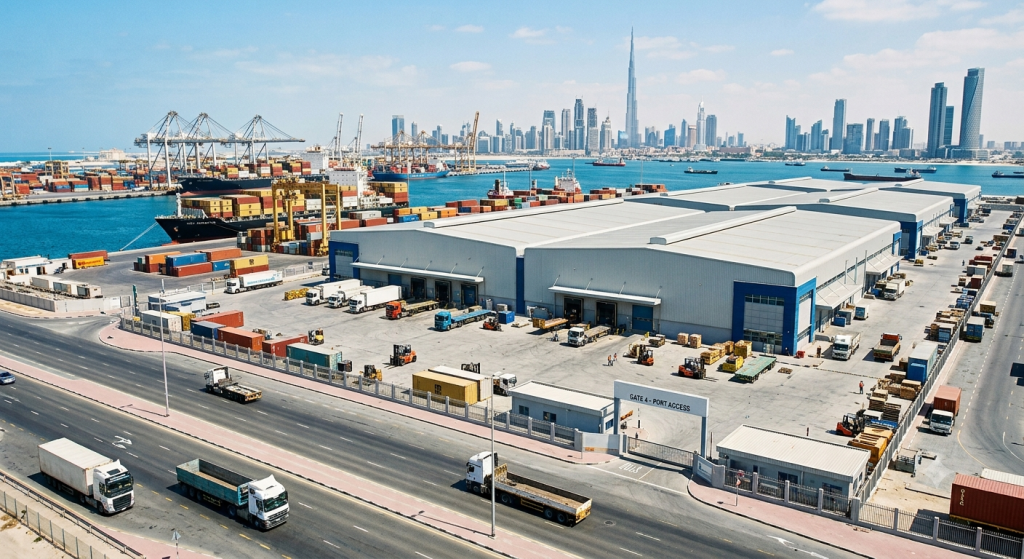
Dubai has spent decades becoming a place where goods move quickly. The next challenge is making sure they stop intelligently too.
Every shipment moving through a port, free zone, retail network or e-commerce supply chain needs somewhere to be stored, sorted, tracked or redistributed. As trade becomes faster and customer expectations rise, the warehouse sitting between arrival and delivery is changing dramatically.
In 2026, the future of warehousing in Dubai is increasingly about technology, flexibility and smarter use of limited logistics space.
Dubai’s warehouse market is under pressure
Demand for industrial and logistics space across the UAE remained strong through 2025.
UAE’s Industrial and Logistics Market Review 2025/26 reported high occupancy and rental growth across major submarkets. Dubai Industrial City recorded year-on-year rental growth of 32%, while approximately 6.6 million sq. ft. of new industrial and logistics stock was expected to enter Dubai during 2026.
Dubai remains an extremely attractive logistics hub, but securing the right warehouse space, at the right location and cost, is becoming more strategic.
Trend 1: Warehouses are becoming smarter
The warehouse of the future is not simply a building filled with racks.
Cloud-based warehouse management systems, IoT sensors, barcode and RFID tracking, automated reporting and business-intelligence dashboards are changing how inventory is managed.
Businesses increasingly want to know: What inventory is available right now? How quickly is it moving? Which stock is sitting too long? Is warehouse capacity being used efficiently?
That means real-time inventory visibility is moving from a premium feature to an operational expectation.

Trend 2: Automation will keep growing
Automation does not necessarily mean replacing every warehouse worker with robots. It can begin with much simpler technologies: automated inventory updates, scanning systems, digital picking instructions, route optimisation and alerts for stock discrepancies.
Larger operations may increasingly adopt automated storage and retrieval systems, conveyors, robotics and AI-assisted demand forecasting. The common goal is straightforward: reduce repetitive manual work while improving accuracy and throughput.
Trend 3: Flexible warehousing will gain ground
Dubai’s trade economy does not always fit neatly into long-term fixed leases.
An importer may need additional storage for three months. An e-commerce company may require more capacity during peak season. A new business may want to enter the UAE without committing immediately to a large facility. This is creating opportunities for flexible warehousing, shared storage and pay-for-use models. Businesses can scale storage according to actual requirements rather than paying year-round for unused capacity.
Trend 4: Location will become even more valuable
When warehouse supply is tight, location becomes a competitive advantage. Facilities close to Jebel Ali, JAFZA, Dubai South and other major transport corridors can help businesses reduce unnecessary cargo movement and improve turnaround times.
The cheapest warehouse per square foot is therefore not necessarily the lowest-cost option overall. Transportation time, port connectivity, accessibility and delivery routes all influence the true logistics cost.
Trend 5: Specialised storage will create new opportunities
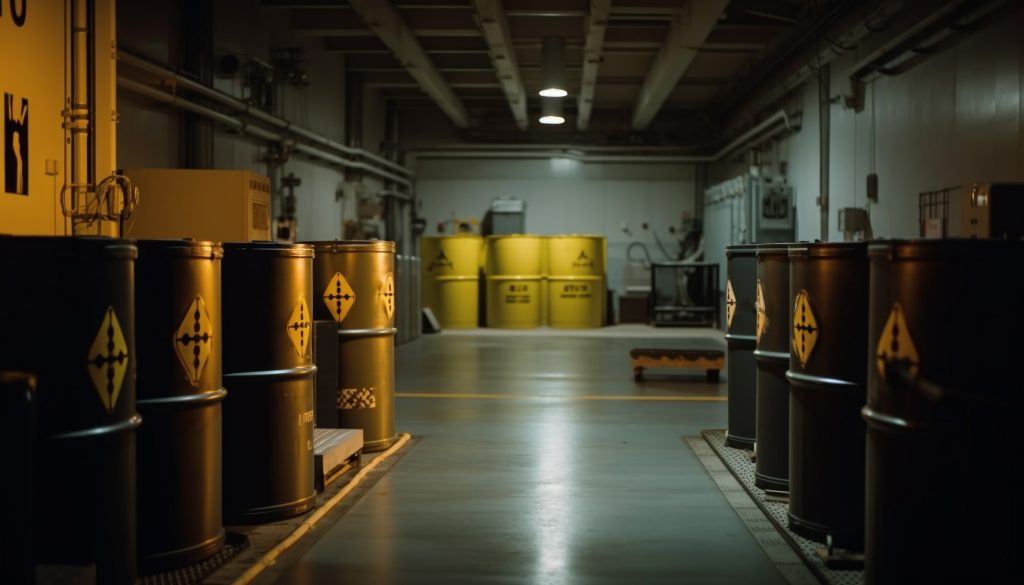
Food and agricultural products may require temperature control. Pharmaceuticals and healthcare products can require tighter quality management. Chemicals and dangerous goods require approved facilities and specific safety protocols.
As Dubai attracts more specialised industries and distribution businesses, demand for cold storage, temperature-controlled facilities, open yards, DG storage and sector-specific 3PL services can expand alongside general warehousing.
What does this mean for businesses?
Companies traditionally treated warehousing as a fixed infrastructure expense. Increasingly, it can be managed as a scalable service. A growing company could use flexible third-party storage instead of building a warehouse. An importer could position inventory closer to customers. A retailer could distribute stock across locations according to demand.
Technology makes these models easier because businesses no longer need to sacrifice visibility simply because inventory sits in a third-party facility.
How stocyard is responding to this shift
stocyard provides technology-enabled warehousing and logistics solutions across the UAE, including 3PL warehousing, dry and industrial storage, temperature-controlled and cold storage, open-yard facilities and approved DG storage. Its smart warehousing model incorporates cloud-based inventory management, real-time tracking, dashboards and reporting. stocyard currently provides access to 100+ warehouse facilities across all seven Emirates, allowing businesses to explore flexible storage options according to location, capacity and operational requirements.
The warehouse of the future is a business tool
Dubai’s next warehousing phase will not be defined only by how many new square feet are built. It will be defined by how intelligently that space is used. Warehouses are becoming connected to inventory data, financing, transportation, order fulfilment and business intelligence. At the same time, flexible models are allowing businesses to expand without necessarily locking themselves into large fixed infrastructure investments.
In a city built around global trade, that matters. Because the future of warehousing in Dubai is about finding the right space, at the right time and using technology to make every square foot work harder.
FAQs
- What is the future of warehousing in Dubai?
Warehousing in Dubai is moving towards technology-enabled, flexible and specialised models. Automation, real-time inventory tracking, smart warehouse management systems and scalable third-party storage are expected to play increasingly important roles.
- Which technologies are transforming warehouses in Dubai?
Technologies such as warehouse management systems (WMS), IoT sensors, barcode and RFID tracking, automation, robotics, AI-based forecasting and real-time inventory dashboards are helping warehouses improve visibility, accuracy and operational efficiency.
- Why is Dubai an important warehousing and logistics hub?
Dubai’s strategic location between major global markets, advanced transport infrastructure, ports, airports and free zones make it an important distribution hub connecting businesses across the Middle East, Asia, Africa and Europe.
- What is flexible warehousing?
Flexible warehousing allows businesses to use storage capacity according to changing requirements rather than maintaining a large fixed facility throughout the year. It can be particularly useful for importers, SMEs, retailers, e-commerce businesses and companies with seasonal inventory. - How can businesses choose the right warehouse in Dubai?
Businesses should evaluate location, connectivity, storage type, security, inventory technology, scalability and overall logistics cost. stocyard provides access to multiple warehousing formats across the UAE, helping businesses select storage according to their operational requirements.