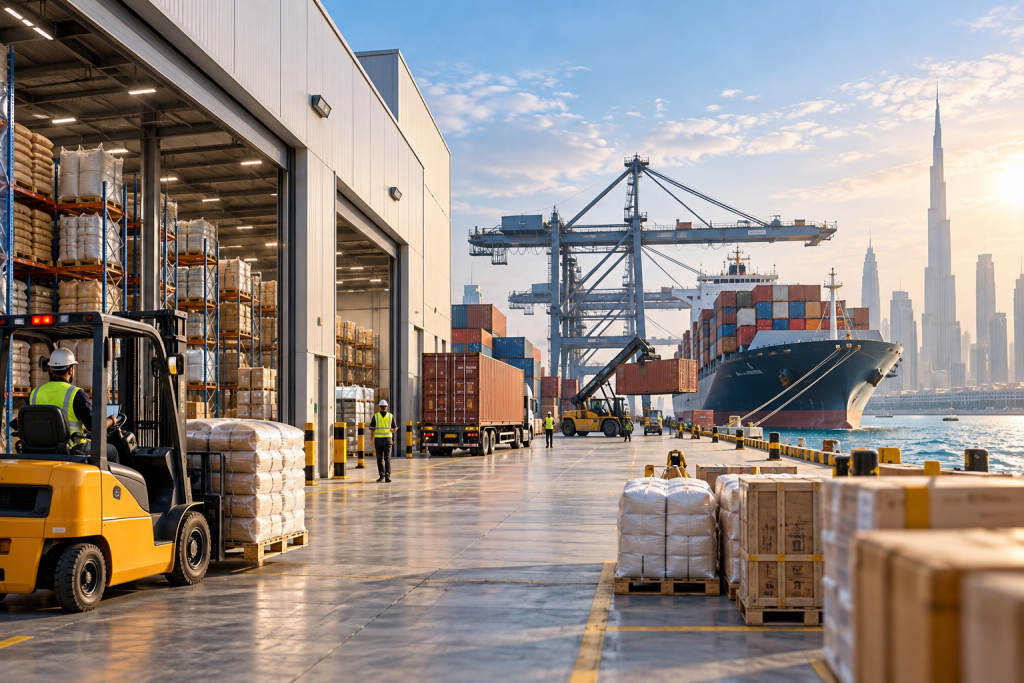
The warehouse used to be the silent part of the supply chain.
Goods arrived. They were stored. Someone recorded where they were kept. When an order came in, the goods moved out.
That description feels increasingly outdated in the UAE.
Warehouses today sit inside fast-moving networks connecting ports, airports, retailers, manufacturers, e-commerce companies and regional distribution centres. That means businesses need more than space. They need visibility, flexibility and better control.
Welcome to the era of Digital Warehousing in the UAE!
Why warehousing in the UAE is changing
Dubai alone recorded 12.3 million sq. ft. of new industrial and logistics requirements during H1 2026, compared with 11.5 million sq. ft. during the same period in 2025. Manufacturing and industry accounted for 35.1% of new requirements, while logistics occupiers represented another 15.5%.
Interestingly, demand is also moving towards larger facilities: 27% of occupiers were looking for spaces above 100,000 sq. ft., compared with only 7.8% in H2 2025. The broader UAE warehousing market is estimated at approximately US$24.99 billion in 2026 and is projected to reach US$44.52 billion by 2033.
More goods and more complex supply chains create a simple problem: manual warehouse processes become increasingly difficult to scale.
What does “Digital Warehousing” actually mean?
A digital warehouse is an operation in which technology supports the movement, monitoring, and management of inventory and warehouse processes.
A digital approach can help businesses maintain better visibility over inventory, organise inbound and outbound movement, improve space utilisation, reduce dependence on disconnected records and generate data that can support faster operational decisions. The warehouse effectively starts behaving less like static real estate and more like an active part of the supply chain.
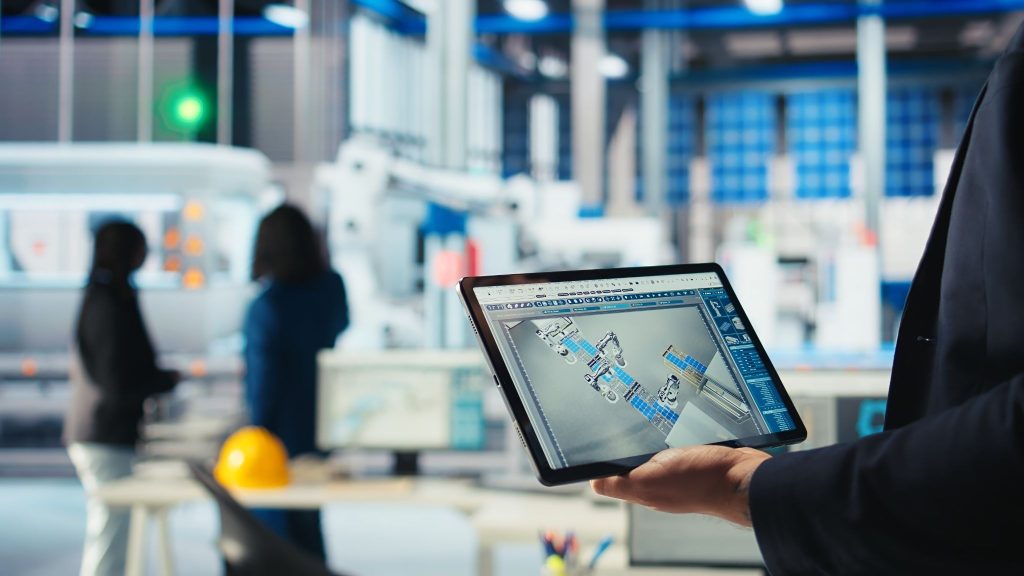
Visibility is becoming the new warehouse currency
Imagine operating across several storage locations. Without connected systems, answering a seemingly simple question — How much inventory do we have and where exactly is it? — can involve calls, spreadsheets and manual reconciliation.
Digital warehouse management changes that relationship with information. Inventory data can become easier to track, movements can be recorded systematically, and warehouse teams can work from a more consistent operational view.
For businesses dealing with frequent dispatches, multiple SKUs or geographically distributed operations, that visibility becomes increasingly valuable.
Flexibility matters just as much as technology
An e-commerce business may prioritise rapid fulfilment. A food company may require temperature-controlled storage. Industrial businesses may need space for machinery or oversized inventory, while another business may simply require an open yard.
This is why the next phase of digital warehousing in the UAE is also about matching the right storage model to the right business requirement.
Where stocyard fits in
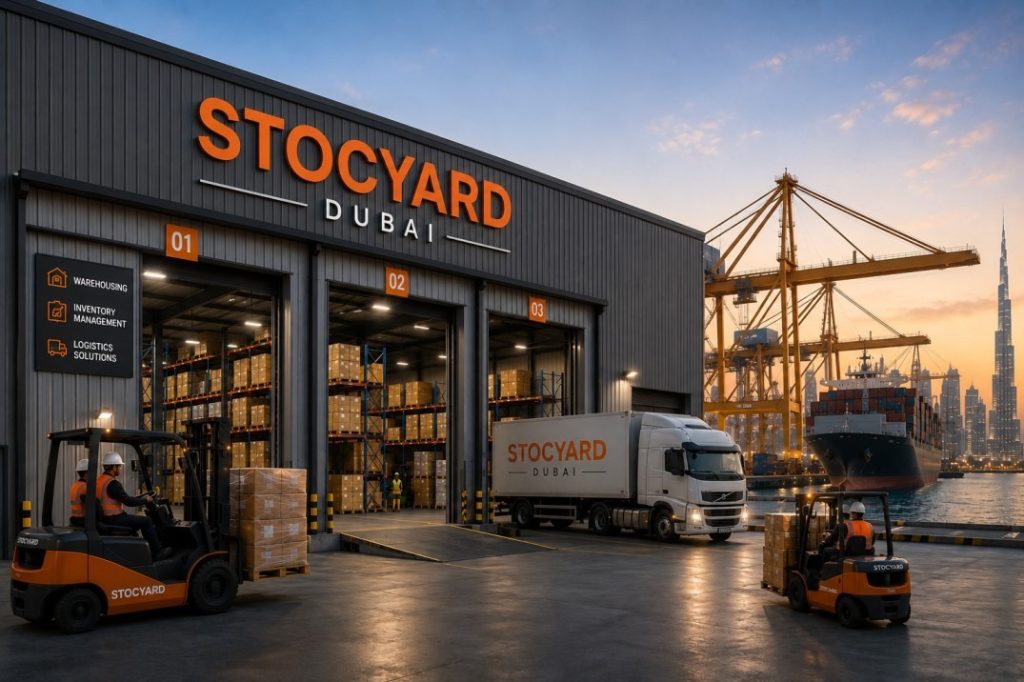
stocyard approaches warehousing as a technology-enabled platform rather than simply a collection of storage locations.
Its UAE network spans 7 Emirates and 100+ warehouse facilities, giving businesses access to warehousing options across the country. Its solutions include 3PL warehousing, open-yard storage, warehouse storage and smart technology-enabled warehouse management.
The platform serves different operational requirements across consumer and retail, food and agriculture, industrials, e-commerce, healthcare and pharma, and B2B distribution. This matters because digital warehousing is ultimately about combining space + operations + information. Businesses should be able to identify suitable warehousing, manage inventory efficiently and scale their storage model as requirements change.
What does this mean for businesses?
The question businesses once asked was straightforward: How much warehouse space do we need?
The better question today may be: What should our warehouse enable us to do?
Should it support faster distribution? Better inventory visibility? Expansion into another Emirate? Flexible storage during seasonal peaks? Third-party logistics? A combination of indoor and open-yard storage?
As UAE supply chains become more sophisticated, warehousing decisions will increasingly be made around these operational outcomes.
The warehouse is becoming part of the digital supply chain
The UAE’s role as a trade and logistics hub means warehouse infrastructure cannot remain disconnected from the rest of the supply chain. Businesses want inventory to move faster, but they also want to know where it is, how it is being handled and whether their storage capacity can respond when demand changes.
That is the real promise of digital warehousing in the UAE. For platforms such as stocyard, the opportunity is no longer simply to provide businesses with somewhere to keep their goods. It is to make the warehouse work smarter while those goods are there.
FAQs
1. What is Digital Warehousing in the UAE?
It refers to the use of technology-enabled systems and processes to improve inventory visibility, warehouse management, storage efficiency and distribution operations.
2. Why is digital warehousing growing in the UAE?
Growth in trade, manufacturing, e-commerce and logistics is increasing the need for efficient, scalable and technology-enabled warehouse infrastructure.
3. What warehousing solutions does stocyard provide?
stocyard offers solutions including 3PL warehousing, warehouse storage, open yards and technology-enabled warehouse management across the UAE.
4. In how many Emirates does stocyard operate?
stocyard’s warehousing network covers all seven Emirates in the UAE.
5. Which industries can use stocyard?
Its solutions serve consumer and retail, food and agriculture, industrials, e-commerce, healthcare and pharma, and B2B distribution requirements.