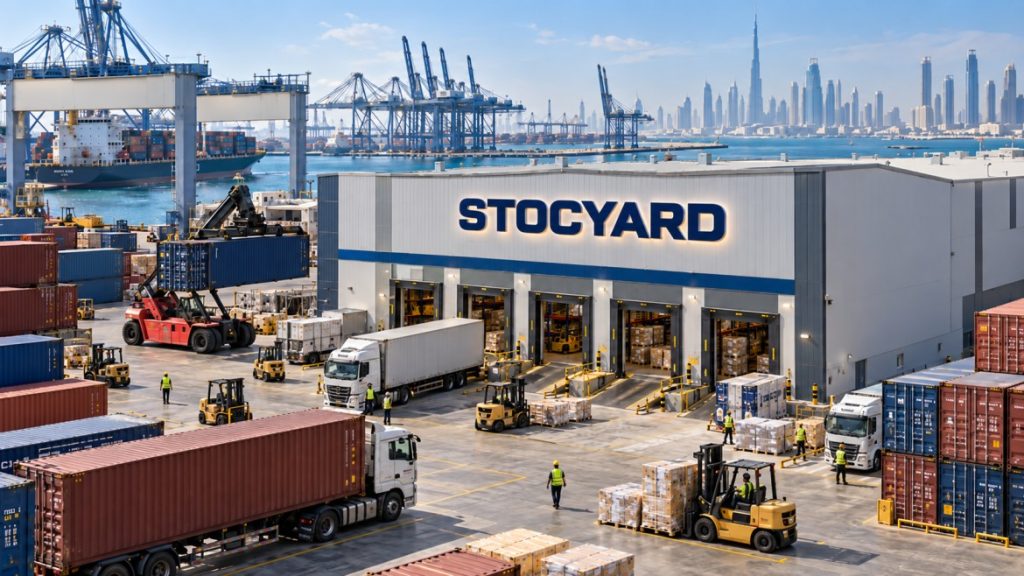
Today, businesses in Dubai may need storage close to ports, flexible space during peak seasons, temperature-controlled facilities for sensitive goods, open yards for machinery or technology-enabled inventory management across multiple locations.
The challenge is no longer simply finding a Dubai warehouse. It is finding the right kind of warehouse for the way your business operates.
The market itself reflects this shift. Dubai recorded 12.3 million sq ft of new industrial and logistics requirements in H1 2026, compared with 11.5 million sq ft during H1 2025. Manufacturing and industry accounted for 35.1% of requirements, while logistics contributed another 15.5%.
So, what storage options should businesses know about?
- General and Dry Warehousing
For packaged goods, consumer products, raw materials and general merchandise, dry warehousing remains one of the most practical solutions. But even conventional storage is becoming more sophisticated. Businesses increasingly want secure facilities, organised inventory systems and the ability to scale capacity without having to build or lease a large facility themselves.
Location also matters. A warehouse positioned near ports, free zones or major transport corridors can influence the overall cost and speed of distribution. For businesses entering or expanding in the UAE, flexible third-party warehousing can therefore offer an alternative to investing heavily in their own infrastructure.
- Temperature-Controlled and Cold Storage
Not every product can simply sit in a standard warehouse.
Food, agricultural products, pharmaceuticals and other temperature-sensitive goods may require controlled environments, including cold, chiller or temperature-controlled storage. This makes specialised warehousing increasingly relevant as Dubai attracts businesses across food, healthcare, retail and international trade.
The important consideration is not just temperature control. Businesses also need to look at compliance, monitoring, security, handling procedures and the ability to maintain product quality throughout the storage period.
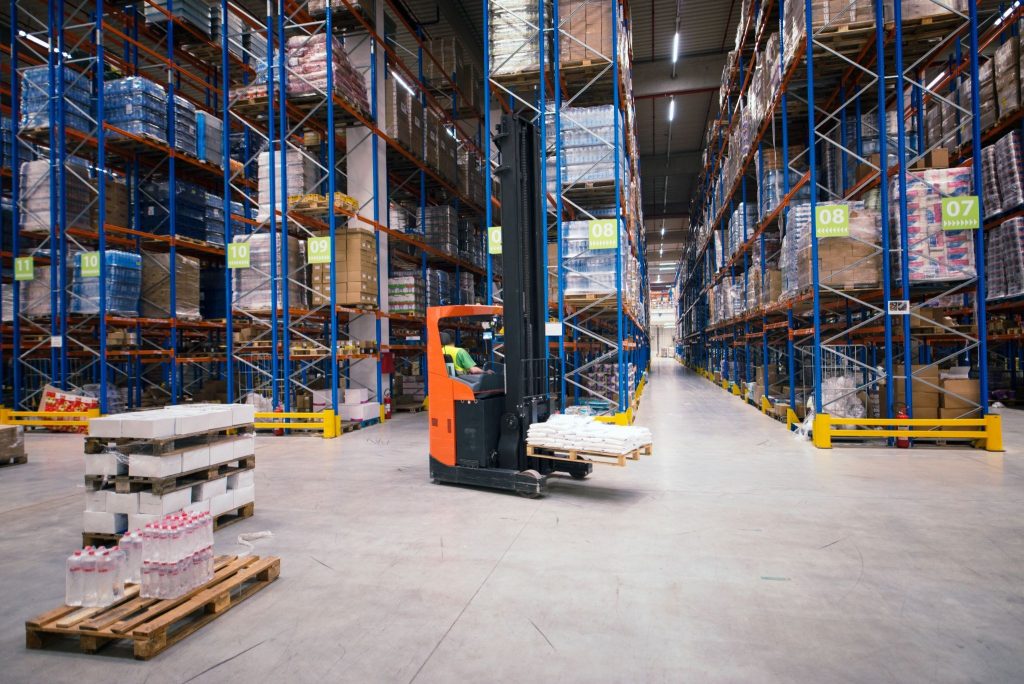
- Open Yard Storage
What happens when your inventory is too large, heavy or awkward for a conventional warehouse?
Open yard storage can provide a practical solution for machinery, heavy equipment, vehicles, construction materials and certain industrial goods. Instead of paying premium indoor warehouse rates for products that do not necessarily require enclosed storage, businesses can use appropriately secured open-yard facilities.
For companies involved in construction, industrial equipment, manufacturing and trading, this can make warehouse planning considerably more flexible. stocyard offers open-yard storage alongside dry, industrial, cold and chiller facilities across the UAE.
- Smart Warehousing
Imagine having inventory information available without calling the warehouse team every time. Cloud-based warehouse management systems, real-time inventory tracking and automated dashboards can provide businesses with a much clearer view of what is stored, where it is located and how it is moving. This becomes especially valuable when inventory is distributed across several locations.
stocyard’s smart warehousing offering includes cloud-based inventory management, real-time tracking across multiple UAE warehouses and data-driven operational insights. The objective is to make inventory more visible and warehouse decisions more data-driven.
- 3PL and Integrated Logistics
Here’s a question businesses often overlook: what happens after your goods enter the warehouse? They may need to be received, stored, picked, moved, consolidated and eventually delivered somewhere else.
This is where third-party logistics, or 3PL, can become useful. Instead of coordinating separate providers for storage and transportation, businesses can work with a partner that manages multiple parts of the movement. stocyard provides 3PL warehousing, import-export warehouse support and real-time shipment and cargo warehousing, allowing storage and logistics to operate as part of a connected service.
What should businesses look for in a Dubai warehouse?
A retailer may prioritise accessibility and inventory visibility. A food business may need temperature control. An industrial company may require open yards. An importer may value proximity to ports and integrated 3PL.
stocyard currently provides access to 100+ warehouse facilities across all seven Emirates and manages 25,000+ CBM of storage space, while its website states that it serves 500+ clients.
And the wider Dubai market is moving towards larger and more sophisticated facilities. Reports suggest that warehouses larger than 100,000 sq ft represented 27% of new requirements in H1 2026, compared with just 7.8% in H2 2025.
The future of the Dubai warehouse isn’t simply about having more space. It’s about having the right space, the right technology and the right operational support.
FAQs
- What types of warehouse storage are available in Dubai?
Businesses can choose from dry and general warehousing, temperature-controlled and cold storage, industrial warehouses, open yards and specialised storage facilities.
- What is smart warehousing?
Smart warehousing uses technologies such as cloud-based warehouse management, real-time inventory tracking and digital dashboards to improve visibility and operational control.
- Is open yard storage suitable for industrial equipment?
Yes. Open yards can be suitable for machinery, vehicles, heavy equipment and other goods that do not require conventional enclosed storage.
- What is 3PL warehousing?
3PL warehousing involves outsourcing storage and related logistics activities to a third-party provider, which can manage functions such as receiving, storage, inventory and distribution.
- What does stocyard offer in the UAE?
stocyard offers warehouse storage, open yards, smart warehousing, inventory finance, quality testing, insurance and logistics & 3PL services across the UAE.