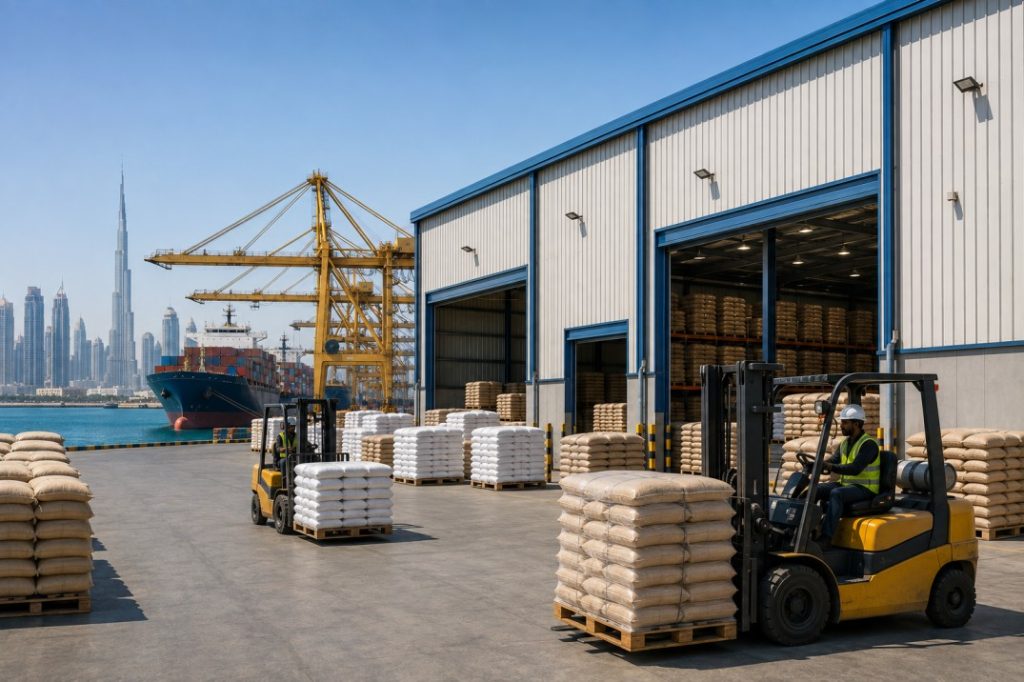
Almost every growing business hits the same wall at some point: inventory piles up faster than the storage space to hold it, and orders start slipping because fulfilment can’t keep pace. This is usually the moment “3PL” starts coming up in conversation.
If you’re new to the term, here’s the short version and why it’s becoming one of the more consequential decisions a scaling business makes.
3PL, defined simply
A third-party logistics (3PL) warehouse is a facility operated by an external provider that handles storage, inventory management, order fulfilment, and often transportation on a business’s behalf. Instead of leasing your own warehouse, hiring your own staff, and building your own logistics systems, you plug into infrastructure that already exists, paying for the space and services you actually use.
It’s the difference between owning a fleet of trucks and simply booking freight when you need it. The underlying function gets done either way; the question is whether you build the capability yourself or rent it from someone who’s already built it at scale.
Some facts & figures
The numbers tell a clear story about where this industry is heading. The global 3PL market was valued at roughly USD 1.6 trillion in 2025 and is projected to climb to around USD 1.8 trillion in 2026, en route to an estimated USD 4.3 trillion by 2035.
The Middle East is a major part of that growth story. The UAE and the wider region are seeing accelerated expansion in 3PL and warehousing, driven by rising trade activity, government investment in logistics infrastructure, and free zones designed specifically to attract distribution and fulfilment businesses.
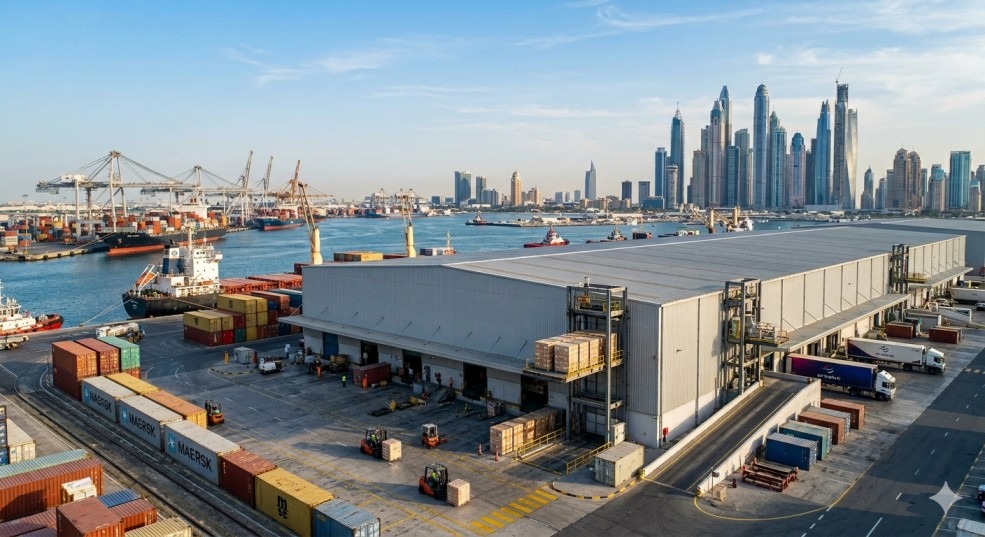
The Middle East and Africa region is expected to see significant growth between 2026 and 2035, supported by ongoing infrastructure buildout and increasing adoption of technology-enabled logistics solutions such as AI-powered route optimisation and cloud-based warehouse management systems.
The real benefits for a growing business
- Lower fixed costs: Building and running your own warehouse means committing to real estate, staffing, equipment, and technology, whether your volumes are high or low that month. A 3PL model shifts much of that from a fixed cost to a variable one, scaling with actual order volume.
- Faster scaling without capital lock-in: Growing into a new region or handling a demand spike (a festive season rush, for instance) typically means renting more space through your 3PL partner rather than signing a long-term lease and building out a new facility from scratch.
- Access to expertise and technology: Established 3PL providers bring warehouse management systems, inventory tracking, and operational know-how that would take a growing business years to build in-house. That includes things like real-time inventory visibility and optimised picking and packing workflows.
- Geographic reach: A 3PL network with multiple facilities across a region lets a business get closer to its end customers without opening its own outposts everywhere it wants to serve, a particularly useful advantage for businesses looking to grow across the UAE and the wider Gulf market.
- Focus on core business: Perhaps the least measurable but most important benefit: outsourcing warehousing and fulfilment frees up management time and capital to be spent on product, marketing, and growth, rather than logistics operations.
Where 3PL fits into a bigger supply chain strategy
3PL isn’t just for e-commerce brands, though that sector has driven a lot of recent demand. Manufacturing, pharmaceuticals, and industrial businesses increasingly rely on 3PL warehousing for everything from bulk storage to specialised handling like cold chain and temperature-controlled logistics, areas where compliance and precision matter as much as space.
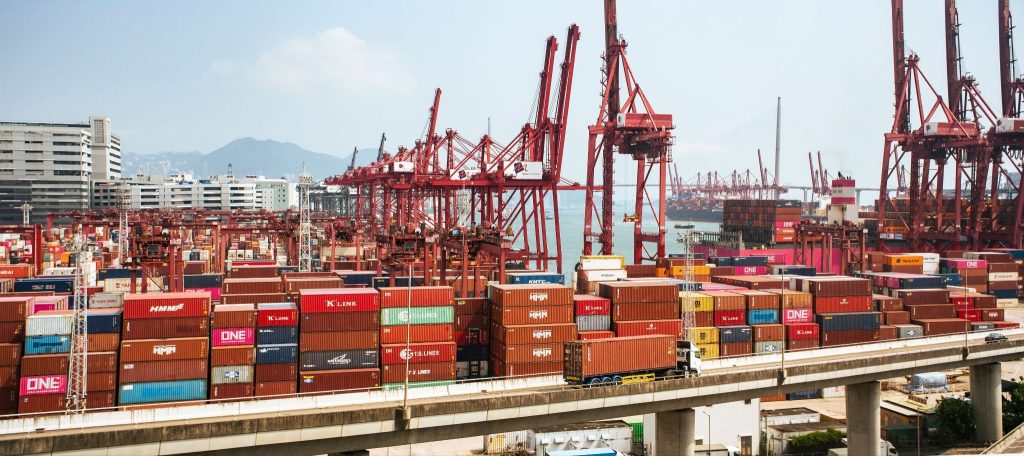
As supply chains grow more complex, working with a 3PL provider that understands the regulatory environment and infrastructure landscape of the UAE specifically becomes less of a convenience and more of a competitive necessity, particularly given how central the country’s free zones and ports are to regional trade.
How stocyard supports growing businesses
stocyard is a Dubai-based warehousing and logistics provider, giving UAE businesses a dedicated partner for storage, inventory management, and distribution across all 7 Emirates. That local footprint is particularly valuable for companies scaling operations that need consistent service standards and real-time visibility into their stock, without the overhead of managing their own warehousing infrastructure.
The bottom line
The decision to move to a 3PL model is usually about redirecting where the control gets applied. Instead of managing forklifts and warehouse leases, growing businesses can focus on the parts of the operation that actually differentiate them, while a specialised partner handles the moving parts of getting products from storage to customer, reliably and at scale.
FAQs
- How is a 3PL different from a 4PL?
A 3PL directly manages physical logistics operations like warehousing and transport. A 4PL typically coordinates and manages multiple logistics providers on a business’s behalf, operating a level above execution.
- Is 3PL only cost-effective for large businesses?
No. In fact, smaller and mid-sized businesses often benefit the most, since 3PL avoids the upfront capital investment needed to build warehousing infrastructure from scratch.
- Can a business use a 3PL for only part of its supply chain?
Yes. Many businesses start by outsourcing storage or a specific region’s fulfilment before expanding the relationship further.
- What industries typically use 3PL warehousing?
E-commerce and retail are among the biggest users, but manufacturing, pharmaceuticals, and industrial businesses also rely on 3PL warehousing for bulk storage and specialised handling like cold chain logistics.
- How quickly can a business scale up with a 3PL partner compared to building its own warehouse?
Significantly faster. Since the infrastructure, staffing, and systems already exist, businesses can typically add storage capacity or expand into a new region in a fraction of the time it would take to lease and set up a facility independently.