Dubai’s warehouse market is booming, and it’s not slowing down. If you’re a business looking to set up or expand storage and distribution in the UAE, you’re entering one of the most dynamic logistics markets in the world. But making the right decision of getting your warehouse in Dubai takes more than just finding available space. Here’s what every business needs to know before signing on the dotted line.
The market reality first
Dubai now accounts for over 66% of the UAE’s third-party logistics market share, supported by infrastructure like Jebel Ali Port, which handles over 22 million TEUs annually, and more than 45 free zones across the country.
The UAE’s freight and logistics sector is valued at USD 23.05 billion in 2026, on track to reach USD 31.63 billion by 2031 at a CAGR of 6.55%.
But demand is outpacing supply. That supply crunch makes knowing what to look for more important than ever.
- Understand free zone vs mainland: How it changes everything
Where your warehouse sits determines who you can sell to. A free zone warehouse gives you customs advantages, 100% foreign ownership, and simplified setup, but historically restricted direct mainland trading. A mainland licence lets you trade anywhere across the UAE without restrictions.
In 2025, Dubai introduced Executive Council Resolution No. 11, allowing free zone companies to obtain a dual licence or mainland branch permit through the Department of Economy and Tourism (DET) for as little as AED 10,000 annually, removing the need to set up a separate mainland entity. Understanding this before you commit to a location can save a high cost and restructuring later.
- Location is everything, and it is priced that way
Not all Dubai industrial zones are created equal. Urban-adjacent areas like Al Quoz (averaging AED 55/sqft) and Ras Al Khor (AED 50/sqft) command premiums due to proximity to consumption centres. Larger hubs like Jebel Ali and Dubai Investment Park run around AED 40/sqft, better for scale, but further from last-mile delivery points.
Match your location to your supply chain model, not just your budget.
- Know what grade of warehouse you actually need
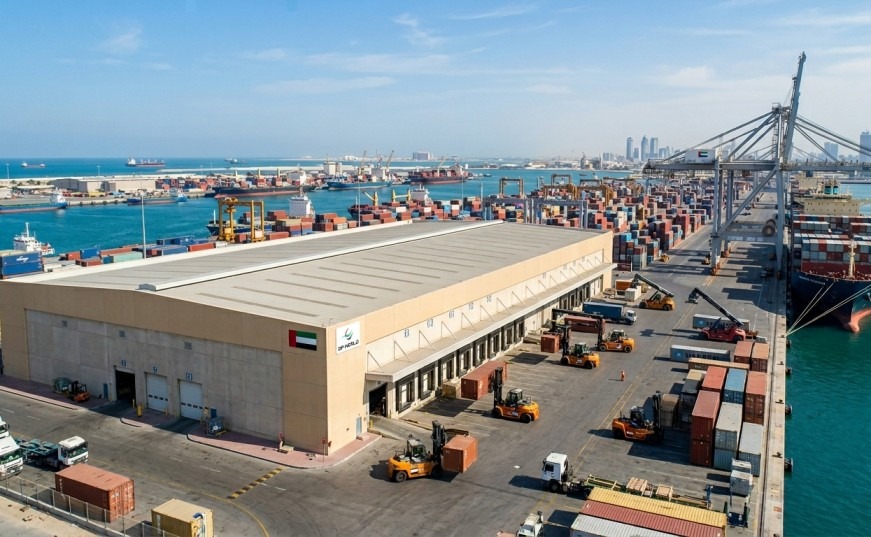
Grade A warehouses, high-specification, tech-enabled, with advanced loading infrastructure, are the most in-demand and most constrained. Most upcoming pipeline stock is already pre-leased before completion.
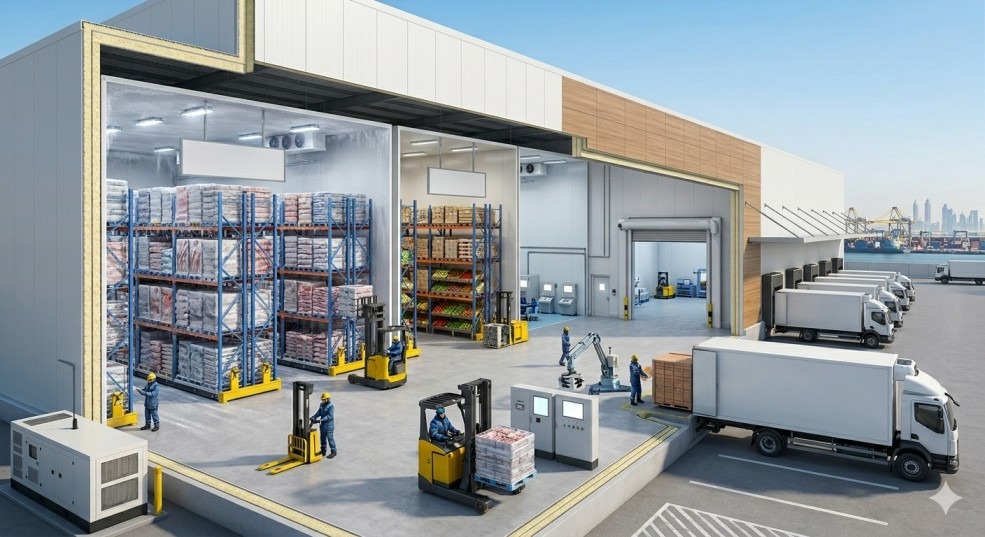
If your operations need temperature control, high eaves height, heavy floor loads, or dock levellers, identify this early. Compromising on spec to save rent often costs more in operational inefficiency.
- Register your lease with Ejari. It’s not optional
All warehouse lease agreements in Dubai must be registered with Ejari, the UAE’s official rental contract system. Without Ejari registration, your lease has no legal standing, and you won’t be able to process visa applications, obtain permits, or resolve disputes through official channels. Factor this into your setup timeline.
- Your trade licence must match your warehouse activity
This is one of the most common mistakes businesses make. Your existing trade licence must explicitly cover the activity you intend to carry out in the warehouse, storage, distribution, light manufacturing, or otherwise. If your licence doesn’t cover it or doesn’t align with the zone, you’ll need to amend or obtain a new one before operations begin. Costs for JAFZA licences start from AED 15,000, while DMCC and similar zones start from AED 20,000.
- Rental rates are rising. Lock in what you can
Dubai’s warehouse rental market saw 8,600 transactions in H1 2025 alone, up 59.9% year-on-year, with rental rates rising 14.1% on average across the market. Renewal activity is also surging, with businesses holding onto existing space rather than risk losing it. If you find the right facility, negotiate multi-year agreements where possible. A two to three-year lease locks in today’s rate and protects you from further escalation.
- Understand what’s included (and what isn’t)
Service charges, utilities, maintenance, security, and loading bay access can significantly change the true cost of a warehouse. Always clarify what’s included in the quoted rent and what will be billed separately. A unit quoted at AED 40/sqft all-in is very different from one at the same rate before service charges.
- Think about scalability from Day One
Dubai’s e-commerce boom is driving demand for flexible, mid-sized facilities. Demand is strongest for units between 10,000 and 50,000 sqft, as businesses prioritise flexibility and speed to market. If your volumes are seasonal or growing, look for a provider that lets you scale up or down without a full relocation.
- Tech and visibility matter as much as location
Modern logistics demands real-time inventory visibility, not just physical storage. As over 70% of logistics enterprises globally plan to invest in automation and smart warehouse technology over the next five years, the gap between tech-enabled and traditional warehouses is widening. Ask whether the facility offers IoT-based monitoring, WMS integration, and digital reporting or find a provider who does.
- Work with a partner who knows the market
Dubai’s warehouse market moves fast. By the time a listing appears publicly, the best units are often already spoken for. Working with a tech-driven platform that has on-the-ground relationships and transparent pricing saves time, avoids costly mistakes, and gets you into the right facility faster.
Where stocyard fits in
stocyard, the UAE warehousing platform by StarAgri, is built precisely for this market. Offering secure, flexible, and tech-driven warehouse solutions across major UAE logistics hubs, stocyard provides real-time visibility, temperature-controlled storage options, 24/7 security, and straightforward booking, whether you need short-term, long-term, or flexible arrangements.
With full distribution services and strategically located facilities across Dubai and the wider UAE, stocyard takes the complexity out of warehouse decisions, letting businesses focus on what they’re actually here to do.
FAQs
- How much does it cost to rent a warehouse in Dubai in 2026?
Costs vary by location and grade. Urban-adjacent zones like Al Quoz average around AED 55/sqft annually, while larger logistics hubs like Jebel Ali run closer to AED 40/sqft. Overall rental rates rose 14–18% in 2025, so locking in multi-year agreements where possible is advisable.
- Can a free zone company rent a warehouse and sell to the mainland UAE?
Yes. Under Executive Council Resolution No. 11 of 2025, free zone companies can obtain a dual licence or mainland branch permit from the Dubai DET for AED 10,000 annually, allowing mainland trade without setting up a separate entity.
- What documents do I need to rent a warehouse in Dubai?
You’ll typically need a valid trade licence with compatible activity codes, passport copies and Emirates ID for the authorised signatory, and a notarised Power of Attorney if a representative is signing. The lease must also be registered with Ejari to be legally valid.
- What is the difference between a Grade A and a standard warehouse in Dubai?
Grade A warehouses offer higher specifications, advanced loading docks, greater eaves height, superior security, and often tech-enabled monitoring. They command premium rents but deliver better operational efficiency. With Grade A occupancy at 95% in Dubai, early planning is essential to secure these facilities. - Is flexible or short-term warehousing available in Dubai?
Yes. Platforms like stocyard offer short-term, long-term, and flexible storage options, ideal for businesses with seasonal inventory cycles or those scaling up operations. This avoids the cost and commitment of a long-term fixed lease during periods of uncertainty.