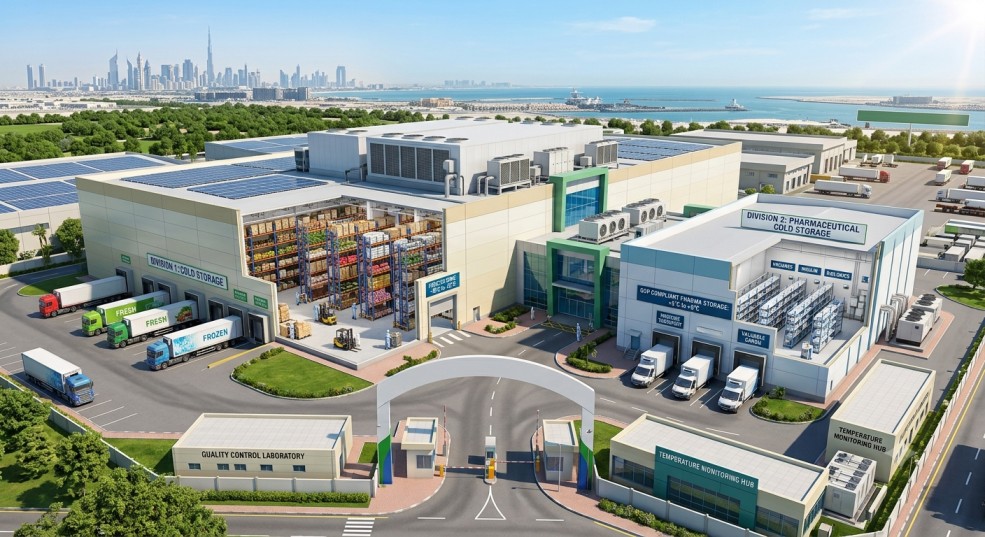
The UAE imports the vast majority of what it eats. It has also positioned itself as a regional hub for pharmaceutical distribution across the Middle East, Africa, and South Asia. Put those two facts together, and you get a single, non-negotiable requirement: cold storage infrastructure that doesn’t fail. Not occasionally. Not under pressure. Ever.
A market built on necessity. Not trend
The UAE cold chain logistics market was valued at approximately USD 1.5-1.65 billion in 2025 and is on track to more than double by the early 2030s, with most forecasts placing it between USD 2.4 billion and USD 3 billion within the next 5 to 9 years, growing at a CAGR in the range of 5.8% to 7.6% depending on the segment. The refrigerated warehousing segment specifically is expected to be one of the fastest-growing pieces of that pie, projected to reach USD 5.5 billion by 2030, a striking 19.1% CAGR that reflects just how much capacity is being built out and how quickly.
This growth isn’t speculative. It’s backed by hard government commitment: the UAE has earmarked over USD 30 billion for logistics infrastructure investment by 2030, with cold chain facilities forming a substantial share of that spend. Free zones like JAFZA, KEZAD, and DAFZA remain the epicentres of this build-out, offering the regulatory and logistical scaffolding on which temperature-sensitive trade depends on.
Why cold storage is non-negotiable for food
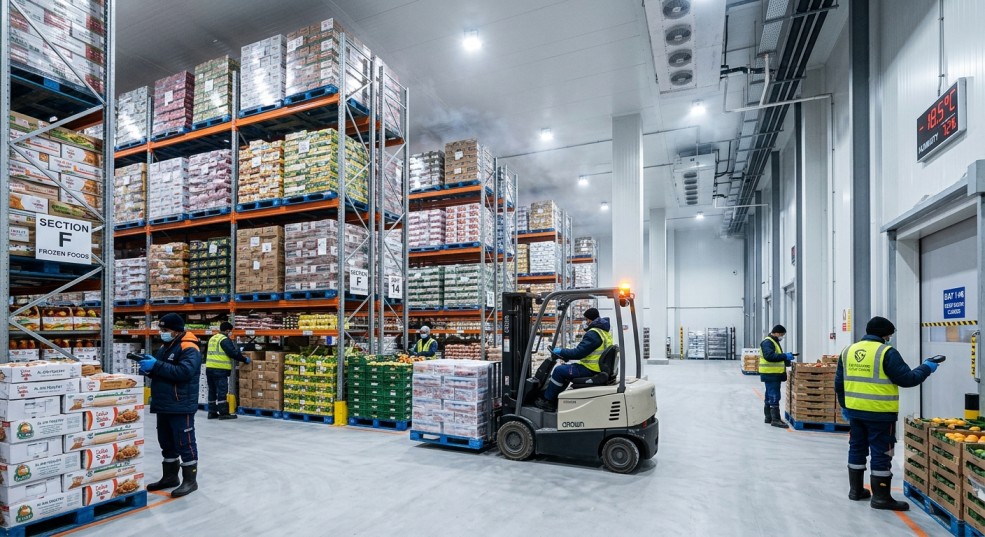
The UAE’s food security strategy rests on a simple reality: with limited arable land and a climate that makes large-scale domestic agriculture difficult, the country depends on imports for the majority of its food supply, particularly fresh produce, dairy, meat, and seafood. Every link in that import chain, from the port of origin to the retail shelf, has to hold temperature within tight tolerances, or the product simply isn’t sellable, and worse, contributes to food waste in a country actively working to reduce it as part of its national food security agenda.
Rising demand for fresh and frozen food, driven by a growing population and one of the world’s busiest tourism and hospitality sectors, is only intensifying this pressure. E-grocery growth has added another layer of complexity, requiring multi-temperature urban distribution nodes that can move product fast without breaking the chain.
Why cold storage is equally critical for pharma
The pharmaceutical side of this story has picked up serious momentum. Regional vaccine distribution hubs are being built out with the scale and specifications to handle dozens of vaccine types, designed to expand as new therapies come online. Air cargo networks serving the UAE are adding dedicated freighter routes and boosting temperature-controlled capacity to move biologics faster which is a clear sign of how seriously the logistics industry now treats pharma cargo.
On the storage side, new multi-thousand-pallet cold facilities purpose-built for audit-ready pharma and healthcare handling are coming online across the country’s free zones, backed by hundreds of millions of dollars in fresh investment toward multi-user, pharma-grade cold storage. None of this is incidental infrastructure. It’s the direct result of the UAE positioning itself as a compliant, certified logistics gateway for a region that badly needs one.

What good cold storage actually requires
Reliable cold chain warehousing in the UAE isn’t just about refrigeration units. It requires real-time temperature and humidity monitoring across every zone, validated handling protocols for regulated goods, redundant power and cooling systems that don’t go down during grid stress, and critical visibility. Operators, retailers, and healthcare providers all need to know exactly where their inventory is, what condition it’s in, and how long it’s been sitting at any given point, not just at the point of delivery.
How stocyard delivers this
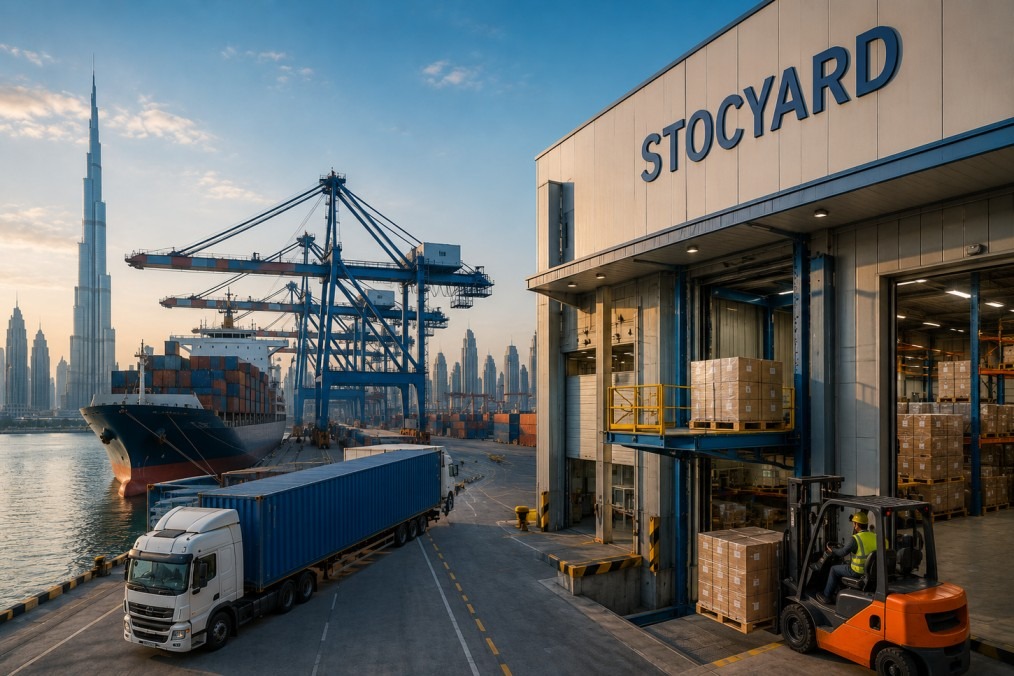
This is precisely the gap that stocyard’s warehousing and logistics infrastructure across the UAE and India is built to close. Our facilities are designed around real-time visibility, giving clients live, accurate tracking of inventory movement and storage conditions rather than periodic manual checks. Temperature-controlled zones are built to the compliance standards food and pharma operators are held to, with the monitoring systems to prove it during audits, not just promise it in a brochure. As part of the broader StarAgri ecosystem, Stocyard also brings the same collateral management and financing expertise that has underpinned agricultural warehousing in India for years, now extended to the UAE market, where speed, compliance, and trust decide who wins long-term client relationships.
The road ahead
As the UAE’s population grows, its pharma logistics ambitions expand, and its food security agenda intensifies, cold storage warehousing capacity isn’t a support function anymore but a core infrastructure. The operators who invest in real-time control, compliance-grade facilities, and genuine supply chain transparency now are the ones who will be trusted with the region’s most sensitive cargo tomorrow.
FAQs
- Why can’t the UAE rely on ambient (non-cold) warehousing for food imports?
Because the UAE imports the vast majority of its food, and most of that, fresh produce, dairy, meat, and seafood, is perishable and requires strict temperature control from the moment it arrives until it reaches the shelf.
- What’s the difference between cold storage warehousing for food versus pharma?
Pharma storage requires validated, audit-ready handling protocols and tighter tolerances, often for products like vaccines and biologics, whereas food storage focuses more on shelf-life extension and spoilage prevention across varying temperature zones.
- Which UAE free zones are best known for cold chain infrastructure?
JAFZA, KEZAD, and DAFZA are the primary hubs, each offering the regulatory and logistical scaffolding needed for temperature-sensitive trade.
- How is real-time monitoring different from traditional cold storage warehousing checks?
Traditional storage relies on periodic manual checks, while real-time monitoring continuously tracks temperature, humidity, and inventory location, flagging issues immediately rather than after the fact. - Is UAE cold storage warehousing capacity growing fast enough to meet demand?
Investment is accelerating quickly, with the refrigerated warehousing segment alone projected to grow at a 19.1% CAGR through 2030, but demand from e-grocery, tourism, and pharma logistics is also rising fast, keeping the sector competitive.