Food products do not stop being sensitive once they reach a warehouse. Temperature, humidity, handling and storage duration can all influence product quality. In the UAE, where businesses depend heavily on food imports, distribution and regional trade, reliable storage conditions are therefore an important part of the food supply chain.
The UAE Government has also identified food supply continuity as a national priority. In April 2026, the UAE Cabinet approved the National Programme to Strengthen Supply Chain Resilience, designed to secure the country’s access to essential food, medical and industrial goods while improving resilience against global supply-chain disruptions. This makes dependable warehousing in the UAE particularly important for food businesses, importers, distributors, retailers and manufacturers.
Why temperature control matters for food storage
Different food products have different storage requirements. Fresh produce, dairy products, frozen foods, meat, seafood and some processed foods cannot be treated in the same way as dry packaged goods. A temperature-controlled warehouse helps maintain a specified environment throughout storage. Depending on the product, this may involve air-conditioned, chilled or cold-storage facilities.
Poor temperature management can contribute to faster deterioration, quality loss and avoidable inventory waste. For businesses handling perishable or sensitive products, this can directly affect margins and customer satisfaction. Temperature control is therefore not simply a warehouse feature. It is part of product quality management.
UAE’s growing focus on food supply resilience
The importance of dependable food storage becomes clearer when looking at the UAE’s wider food-security strategy. Federal Law No. 3 of 2020 regulates the strategic stock of food commodities and requires registered merchants to manage strategic food stocks and maintain designated warehouses within the UAE. The law also provides for monitoring quantities, varieties and the condition of strategic stocks.
What businesses should look for in temperature-controlled warehousing
Choosing a suitable facility involves more than checking whether the warehouse has cooling equipment.
- Consistent temperature management: The warehouse should be capable of maintaining the required temperature range for the specific product. Stable conditions matter because repeated temperature fluctuations can affect sensitive inventory.
- Monitoring and visibility: Modern facilities can use digital monitoring and warehouse management systems to provide greater visibility into inventory and operating conditions. This is particularly useful when businesses manage multiple SKUs or storage locations.
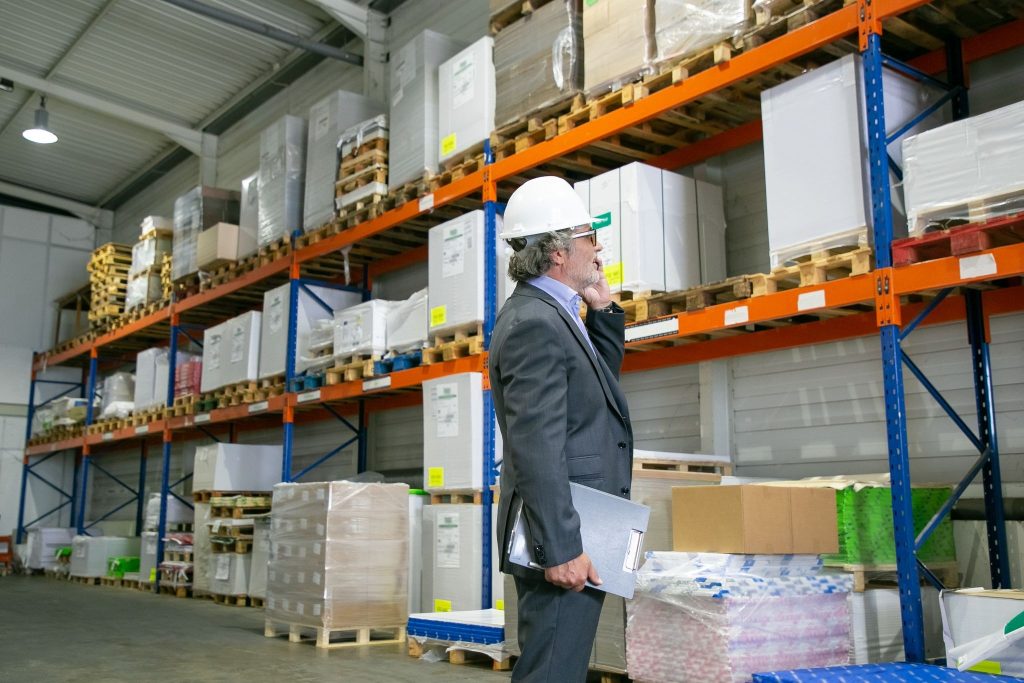
- Appropriate handling infrastructure: Cold and temperature-sensitive goods often require efficient receiving, put-away, picking and dispatch processes. Minimising unnecessary exposure to unsuitable conditions can help protect product quality.
- Security and compliance: Food businesses also need secure facilities, controlled access, fire-safety systems and appropriate operational procedures. These factors become even more important when inventory represents significant commercial value.
- Location and distribution access: A temperature-controlled warehouse located close to ports, free zones, major roads or distribution centres can help businesses reduce unnecessary movement and improve delivery coordination.
Dubai’s logistics ecosystem is already seeing substantial demand. During the first half of 2026, Dubai recorded 12.3 million sq. ft. of new industrial and logistics requirements, compared with 11.5 million sq. ft. during H1 2025. Manufacturing and industry represented 35.1% of requirements, while logistics accounted for another 15.5%.
How stocyard supports food businesses
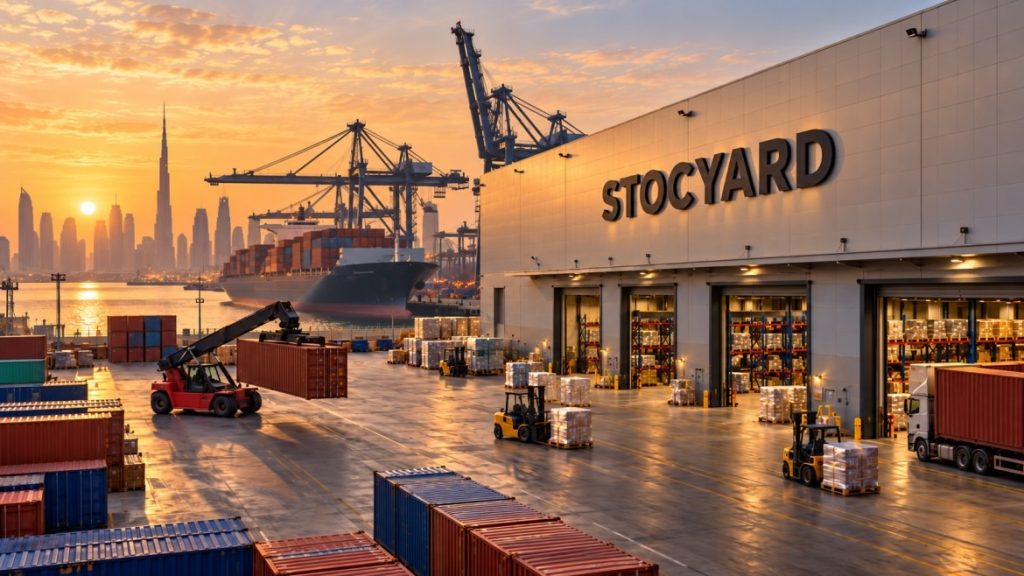
For companies looking for warehousing in the UAE, stocyard provides access to warehouse facilities across all seven Emirates, including temperature-controlled and cold-storage options. Its platform currently provides access to 100+ warehouse facilities and 25,000+ CBM of storage space. Its warehousing model combines physical storage with technology-enabled inventory management.
Cloud-based WMS capabilities, real-time inventory tracking, dashboards and reporting can give businesses greater visibility into stock and warehouse activity. For food and agriculture businesses, this can be particularly useful when storage needs change with seasonality, imports, demand cycles or distribution requirements. stocyard also provides logistics and 3PL services, allowing businesses to connect storage with movement and distribution rather than managing every part of the supply chain separately.
Building a more reliable food supply chain
Temperature-controlled warehousing is becoming an important part of the UAE’s evolving food and logistics infrastructure. As the country strengthens food-security systems and expands its position as a regional trade hub, businesses need storage solutions that protect products while also providing flexibility and visibility. Apart from holding the inventory, the right warehouse helps businesses maintain product quality, manage stock efficiently and keep goods moving through the supply chain.
For food businesses operating in the UAE, investing in the right temperature-controlled storage model can therefore be a practical step towards building a more reliable, responsive and resilient supply chain.
FAQs
- What is temperature-controlled warehousing?
Temperature-controlled warehousing refers to storage facilities designed to maintain specified environmental conditions for products that require controlled temperatures, including certain food, beverage, pharmaceutical and agricultural products.
- Why is temperature-controlled storage important for food products?
It helps maintain suitable storage conditions, protect product quality and reduce the risk of deterioration caused by unsuitable temperatures during storage.
- Which food products may require temperature-controlled warehousing?
Products such as dairy, meat, seafood, frozen foods, fresh produce and certain processed foods may require chilled, cold or otherwise temperature-controlled storage depending on their specific requirements.
- What should businesses consider when choosing warehousing in UAE?
Businesses should consider temperature requirements, location, storage capacity, monitoring systems, security, handling capabilities, flexibility and access to logistics or 3PL services. - Does stocyard provide temperature-controlled warehousing in the UAE?
Yes. stocyard provides access to temperature-controlled, cold and chiller storage options across its UAE warehousing network, along with smart warehousing, logistics and 3PL services.